Troubleshooting
One Burner Dead and the Rest Fine: Gas, Radiant and Induction
Split the problem first: one dead zone points at that zone — its element, its switch, its igniter or its connection — while everything dead at once points at the supply, the control or a lock. On induction there is a third answer that costs nothing: Samsung's underlined u means pan detection, and a zone will refuse cookware that is not magnetic, is too small for the ring, or is off-center. Test it by swapping pans and swapping zones. On gas, a burner cap a millimeter off its seat will click forever without lighting, and a burner washed and put back damp does the same until it dries — both free. On a radiant electric top, one dead zone is the element or its infinite switch. And on any touch cooktop, check the control lock and wipe the panel dry before assuming anything, because a wet capacitive panel behaves like a locked one.
The full guide
How to fix Samsung electric stove burner not working: the question that halves the problem
Before anything else: is it one zone, or all of them?
One zone dead, the rest fine. The problem is in that zone — its heating element or coil, the switch that controls it, its igniter, or the connection to it. The control, the supply and everything shared are working, because the other zones prove it.
Everything dead at once. Now it is shared: the supply to the cooktop, the control board, or a lock that has been set.
That single observation is worth more than any amount of dismantling, and it is free.
Induction: the pan is part of the appliance
If your cooktop is induction, there is an answer here that costs nothing and applies about nine times out of ten.
Induction heats the pan itself, with a magnetic field, so the pan is not a passive object sitting on a hot surface — it is part of the circuit. Samsung draws the symbol for this as an underlined u: the maker's own picture of a pan bottom sitting above a surface. It means the cookware is unsuitable in size, material or placement, and the zone will not heat. Left uncorrected, the element switches itself off after about a minute.
Two tests, one minute:
Swap the pan. A magnet on the base is the quick check — if a fridge magnet sticks firmly, the pan will work. Aluminum and copper will not unless they have a magnetic base bonded on.
Swap the zone. A pan that works on the large ring and not the small one is a size problem, not a machine problem. The base has to cover enough of the coil to be detected, and Samsung publishes minimum diameters for each zone.
If good, magnetic, correctly sized cookware is refused on every zone, then the coil or its sensing is the question — and that is a repair.
The other thing worth knowing about induction is the fan. There is a cooling fan under the counter that almost no owner knows exists, and it needs air. A cabinet below that has been filled with stored pans, or a ventilation slot closed in during a remodel, cooks the electronics — and the machine responds by shutting zones down, one at a time, after a few minutes of use. It looks like a failing cooktop and it is a ventilation problem.
Gas: two free checks before the part
A burner that clicks and will not light is the most common gas cooktop complaint, and the two cheapest causes come first.
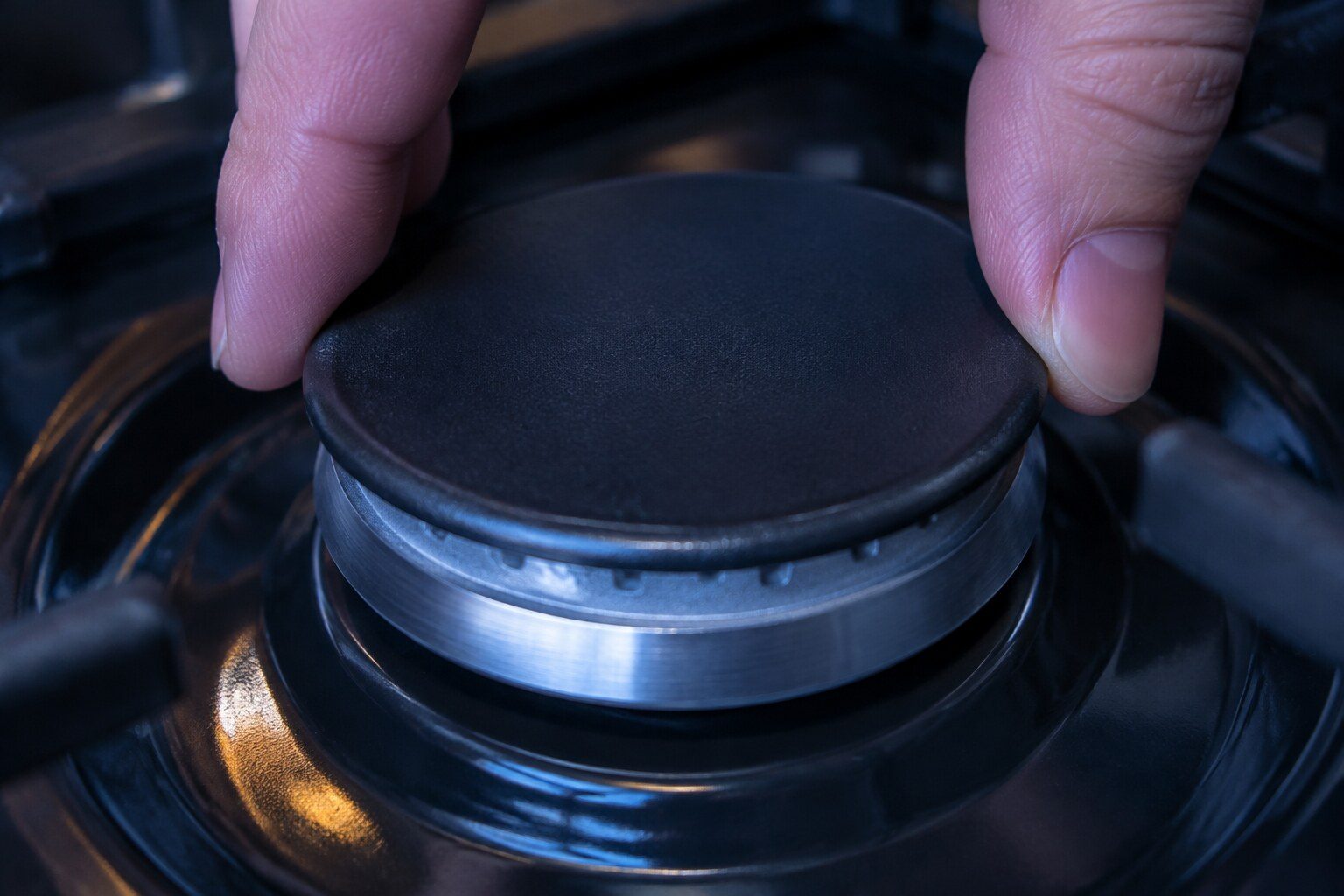
The cap. Lift the burner cap off and put it back squarely on its seat, centered. A cap sitting a millimeter out of position will spark forever without ever igniting the gas, because the spark is not where the gas is.
Moisture. A burner that has been washed and put back before it was completely dry will click and do nothing until it dries out. This one catches people the day after a deep clean, and the fix is patience.
After those it is the igniter for that burner, or its wiring. And if every burner clicks and none lights, it is the spark module or the gas supply rather than four simultaneous igniter failures — check whether other gas appliances in the house are working.
A burner that lights eventually, after a lot of clicking, is an igniter on its way out. Worth dealing with rather than living with: a burner releasing gas for several seconds before it lights is not a small thing.
Radiant electric: element or switch
On a ceramic top with radiant elements underneath, one dead zone is either the element itself or the infinite switch that controls it — the component that turns a dial position into a duty cycle of on and off.
Telling them apart is a measurement, and it matters because they are different parts at different prices. An element that has failed is usually visibly damaged when you can see it; a switch that has failed is not.
One thing worth knowing about these: radiant elements cycle on and off even at full power. A zone that glows, goes dark, and glows again is behaving normally, not failing.
When the whole top is dead
Three things, in order of how much they cost.
The control lock. Every touch cooktop has one, it is usually a press and hold on a specific key, and it is set by accident during cleaning constantly. Look for a padlock indicator.
Moisture on the panel. A capacitive surface with water on it, or steam rising past it from a pot, behaves exactly like a locked one — it stops responding, or responds to touches nobody made. Dry it thoroughly and try again.
Supply. A cooktop is usually on its own circuit, and on a 240-volt appliance half the supply missing produces some very confusing symptoms — a panel that lights and zones that do not heat, for instance. Samsung reports the connection version of this as bAd LinE, and that one is not something to work around: a loose terminal on a 240-volt appliance gets hot.
The one we cannot fix
A cracked glass or ceramic top is a safety matter rather than an appearance one. Liquid can reach the element or the coil underneath, and the surface is carrying both.
Switch it off at the breaker and leave it off until it is dealt with. Whether the glass can be replaced separately depends on the model — on some it is available and on some the whole cooktop is the part — and we will tell you honestly which yours is rather than after we have arrived.

Questions people ask about this
The zone works for a minute and then switches off.
On induction that is either pan detection or thermal protection. Pan detection switches the element off after about a minute if the cookware is unsuitable. Thermal protection acts when the electronics under the counter are getting too hot, and the usual cause of that is a cabinet below packed with stored pans, or a ventilation slot closed in during a remodel.
All four gas burners click and none of them lights.
That points at the spark module or the gas supply rather than any one burner. Check that other gas appliances in the house are working. If they are, it is the module.
There is a chip in the glass. Does it matter?
A chip is not a crack, but watch it. Any crack that goes through means switching the cooktop off at the breaker until it is dealt with, because liquid can reach what is underneath. We will tell you honestly whether the glass is available separately for your model — on some it is and on some it is not.
The panel does not respond at all.
Check the control lock first: every one of these tops has one and it is easy to set while cleaning. Then dry the panel thoroughly. A capacitive surface with water on it behaves exactly like a locked one, and steam from a pot is enough.
Troubleshooting
More guides like this one
-
Resetting a Samsung Ice Maker: Five Cabinets, Five Procedures
Samsung publishes five different reset procedures, one for each place it puts an ice maker. They are not interchangeable — and a reset is the wrong move more often than people think.
Read more -
Before You Call Anyone About a Warm Refrigerator, Check for a Mode
Samsung has a mode that lights the whole panel and does not cool. It gets switched on at home by accident, it is free to clear, and it produces the most alarming symptom an appliance can produce.
Read more -
A Microwave That Runs and Does Not Heat, and the Honest Arithmetic
The diagnosis is quick. The decision is not — because the same failure has three different prices depending on where the appliance sits.
Read more
Tell us the model number and what it is doing.
This article is based on:
- Official manufacturer documentation
- Internal repair procedures
- Technician repair history
- Company quality standards