Appliance
Samsung dishwashers
Twenty in the current catalog, most of them between 38 and 46 dBA, and almost all of them quiet enough that the first sign of trouble is a light rather than a noise. Samsung dishwashers speak two languages about failure: seventeen error codes on the models with a display, and forty different combinations of blinking cycle lights on the models without one.
- 4 symptoms we are called out to
- From $95 diagnostic, credited to the repair
- 59 cities and neighborhoods covered
- OEM parts available on order
The short version
What this equipment is, for a repair
Configurations
StormWash · Linear Wash · WaterWall · third rack · AutoRelease · Bespoke fronts
Access
Planned before the visit, not discovered on arrival
Parts
OEM, available on order
Diagnostic
From $95, credited to the repair
What goes wrong with it
Symptoms we are called out to on Samsung dishwashers
Each one covers the likely causes in the order they are worth checking, and what to do in five minutes before booking anything.
-
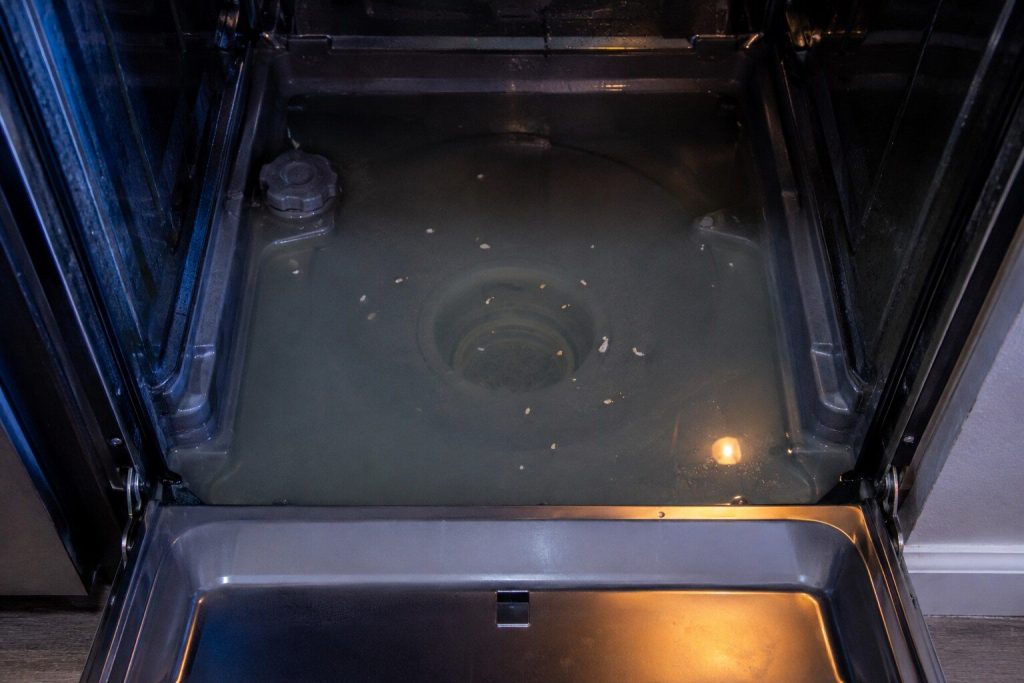
Standing water in the bottom of the tub Dishwasher not draining
Samsung reports this as 5C on machines with a display and as a single blinking cycle light on the rest. The order that resolves most of them costs nothing but time, and one item on that list is why a brand new dishwasher can never have drained since the day it was fitted.
- The filter comes out by hand and most owners never knew it was there
- The disposer knockout plug is the classic never-drained-since-installation cause
- 5C and its blinking-light equivalent are the same condition
-
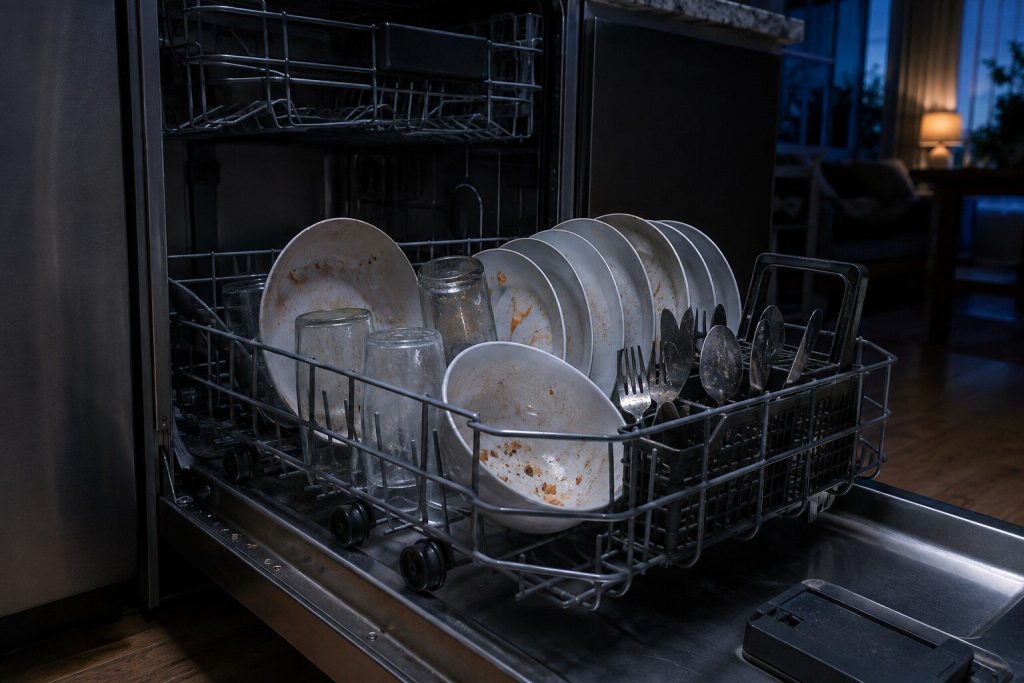
Food left on the dishes and film on the glasses Dishwasher not cleaning
Samsung makes a point on their own support pages that matches what we find: when something is genuinely wrong with a dishwasher, it usually shows up as filling, draining or an error as well. Cleaning alone, with everything else normal, is far more often loading, detergent, water temperature or a blocked arm.
- If nothing else is wrong, this is usually not a repair
- Inlet water temperature is the most common single cause
- WaterWall, Linear Wash and StormWash each fail differently
-
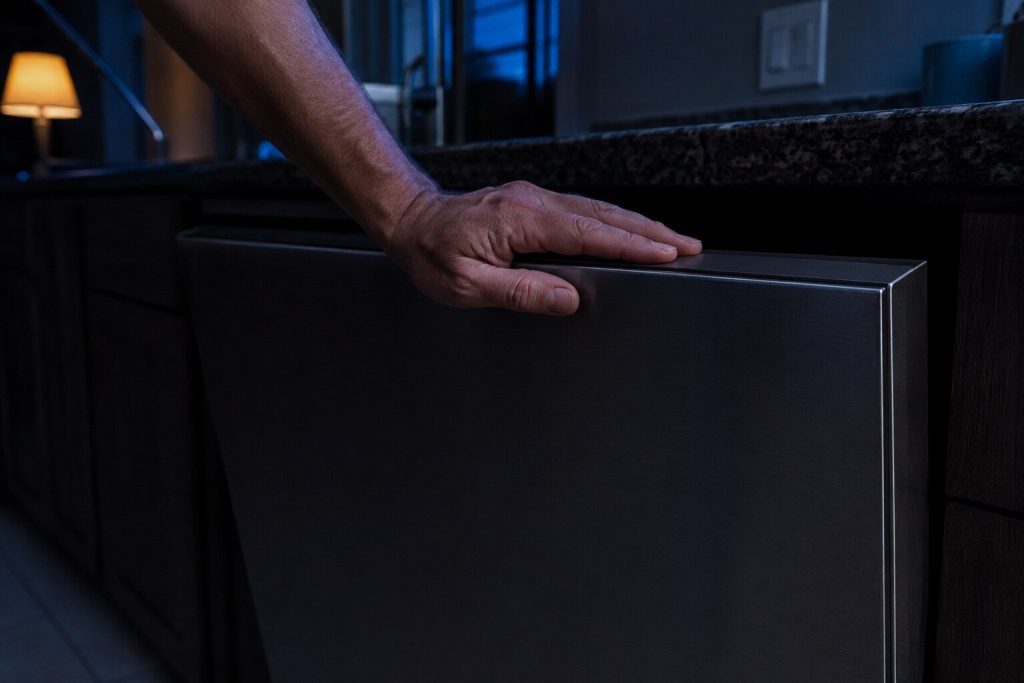
The door is closed and nothing happens Dishwasher will not start
Three families sit behind this, and they are separated by what the panel does. A panel that is completely dead is one thing, a panel that lights and refuses is another, and a machine that beeps and starts a cycle that goes nowhere is a third.
- A door that closes silently is not latching
- Control lock and delay start are set by accident constantly
- A stuck button locks out the whole panel — Samsung's bE
-
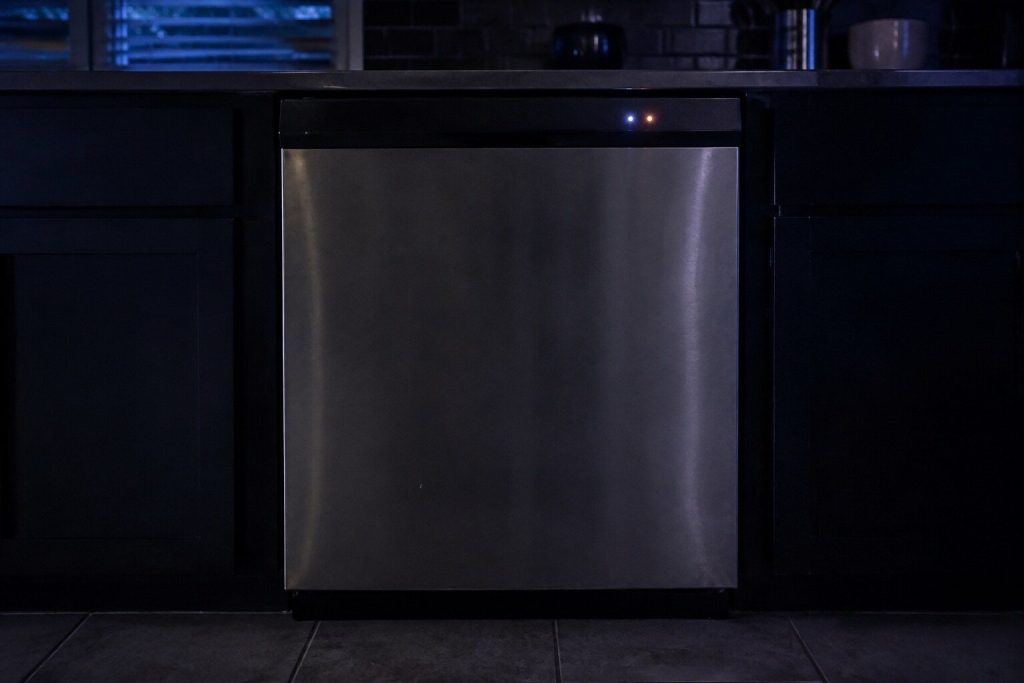
A combination of cycle lights, and no code Dishwasher lights blinking
On Samsung dishwashers without a digital display, the cycle lights are the code. Samsung publishes forty combinations and what each of them means — and it also says something that saves service calls: on some models the lights blink to show cycle status, so it is only an error if the machine is misbehaving as well.
- Forty published combinations, and sixteen distinct meanings behind them
- Write down which lights before you switch anything off
- Blinking alone is not always an error — Samsung says so
What we do on it
Repairs we carry out on Samsung dishwashers
Starting figures for this equipment in South Florida. The exact cost is confirmed after an on-site diagnostic — and this is not the whole list of what can go wrong, so call if your problem is not here.
-
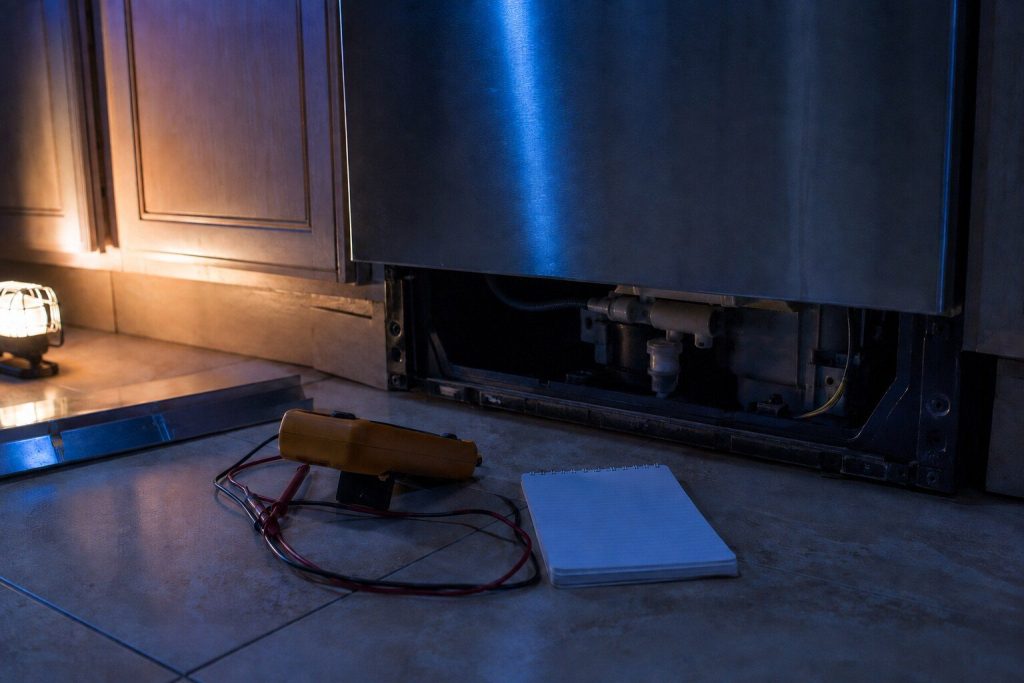
from $95 Diagnostic visit
One visit, one technician, one answer in writing. On this make the diagnostic starts with something most makes cannot offer: the appliance usually has something to say. A code, a combination of blinking lights, or on a Family Hub refrigerator a stored list of everything it has recorded. Reading that properly is half the job, and it is free to do.
- The model number and what the appliance is reporting, read before anything is opened
- Blinking lights and Family Hub self-check included, because they are codes on this make
- Written findings and a from-price before any part is ordered
-
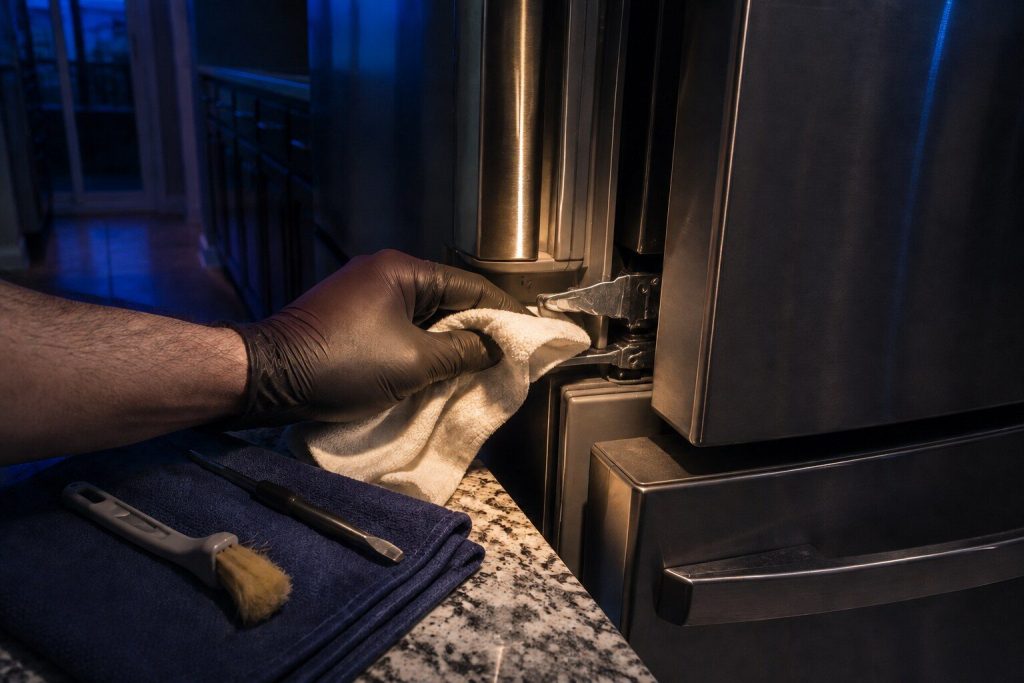
from $125 Appliance maintenance
An annual visit for the things that fail slowly enough that nobody notices until they stop. In this climate that list is longer than it would be anywhere dry: condenser coils, door gaskets, dryer ducts, dishwasher filters and the drum of a front-load washer all degrade quietly, and every one of them is cheaper to maintain than to repair.
- Condenser coils, gaskets and door seals checked and cleaned
- Dryer duct and lint path, which is the one that matters most
- Filters, drains and water lines on everything that uses water
-
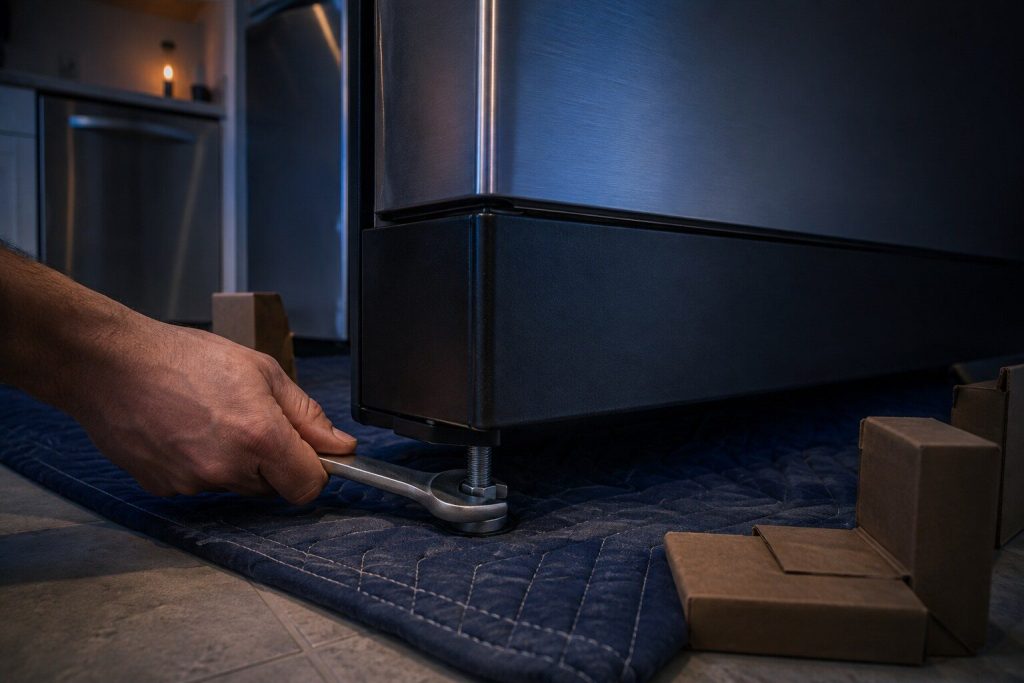
from $145 Appliance installation
Fitting an appliance so that it works the way it was designed to, and so that the next person who has to service it can reach it. A surprising share of the calls on this site are installation errors surfacing months later — hoses crossed, a dishwasher drain plug never removed, a dryer vent crushed behind the machine.
- Levelled, connected, tested and left working
- Water, drain and vent connections done properly rather than quickly
- Old appliance disconnected and moved out
-
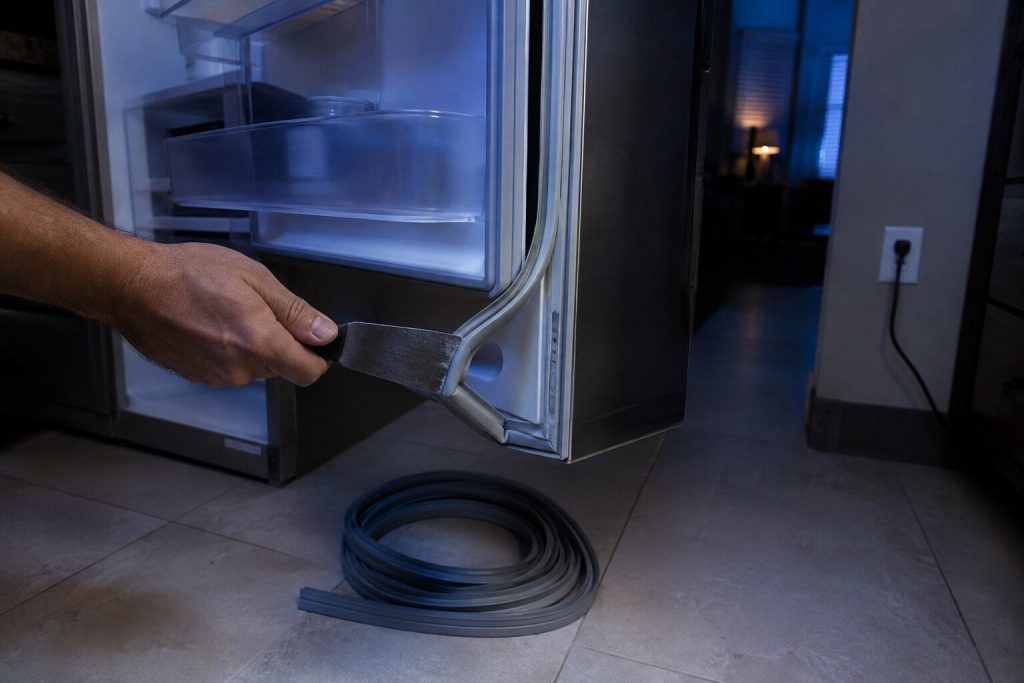
from $145 Door seal replacement
A gasket is the cheapest part in the appliance and the one whose failure costs the most, because it does not break, it degrades. Warm wet air walks in past a seal that has lost its grip, and the result presents as a cooling problem, an icing problem or a running-constantly problem long before anybody looks at the rubber.
- Tested with a note and a light rather than by eye
- Door alignment and hinge sag checked at the same time
- The same job on refrigerators, dishwashers, washers and ovens
-
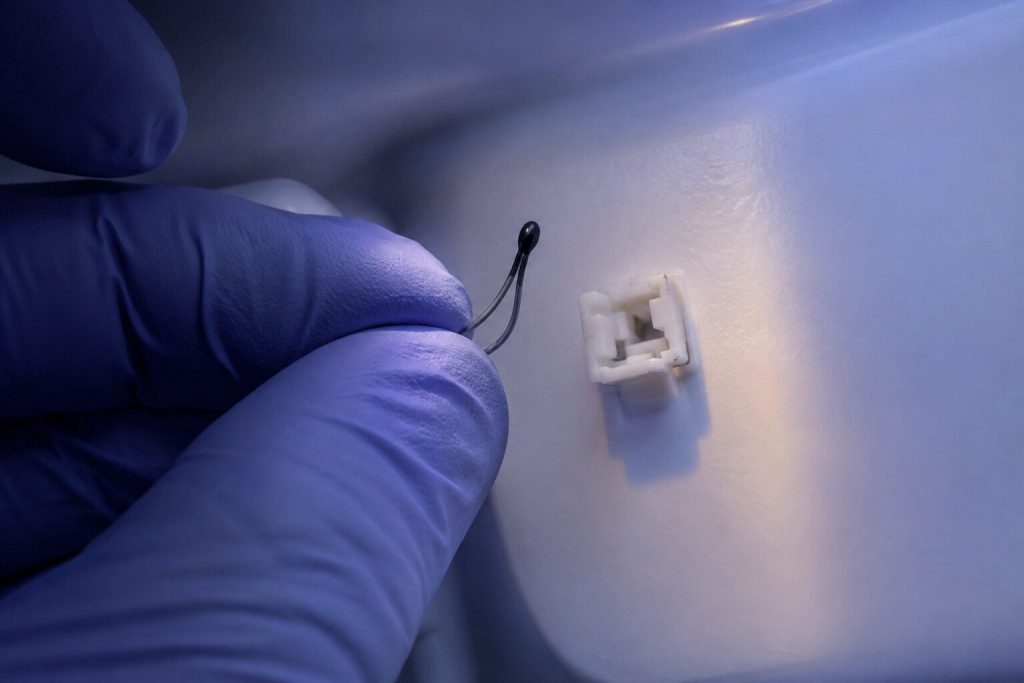
from $155 Temperature sensor replacement
A thermistor is a small, cheap part that decides large, expensive behavior. Samsung publishes sensor codes on almost every appliance it makes — tE on the washer and the dishwasher, the C-20 family on microwaves, 5E on the refrigerator — and the symptom is nearly always the same shape: something that heats or cools when it should not, or will not when it should.
- Measured against its own resistance curve, not swapped on suspicion
- The circuit around it checked before the part is blamed
- The same job across refrigeration, laundry and cooking
-
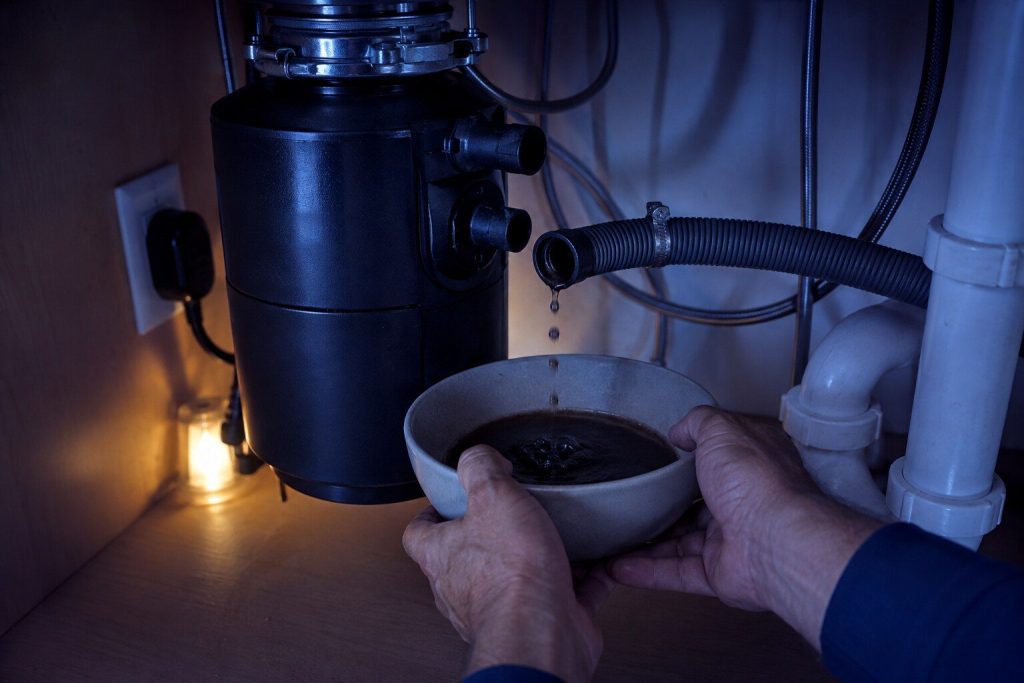
from $145 Dishwasher drain repair
Standing water in the bottom of the tub, or a cycle that never finishes. Samsung reports it as 5C on machines with a display and as a single blinking cycle light on machines without one, and the sequence that resolves most of them costs nothing but time — including the one cause that stops a brand new dishwasher draining from the day it was fitted.
- Filter, hose, high loop and disposer connection before the pump
- The knockout plug that installers forget, checked every time
- 5C and its blinking-light equivalent are the same job
-
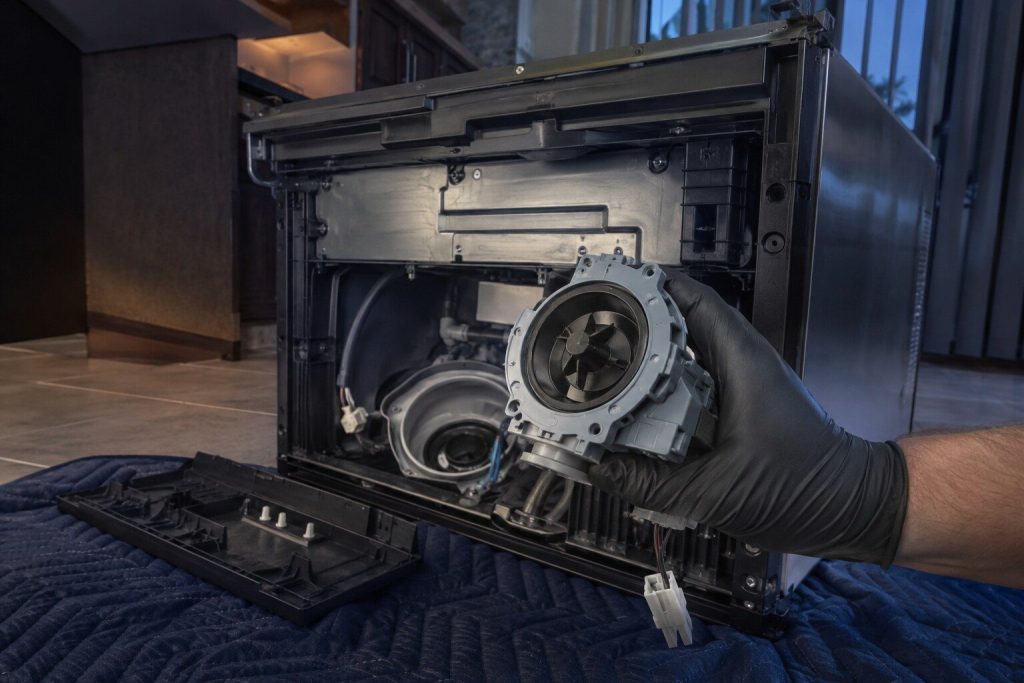
from $235 Dishwasher pump replacement
Two different pumps live in a dishwasher and they fail differently: the wash pump that circulates water round the tub, which Samsung reports as 3C, and the drain pump that empties it. Telling them apart before ordering is what keeps this from being two visits.
- Wash pump and drain pump diagnosed separately
- 3C confirmed rather than assumed from a silent machine
- Seals and the sump gasket replaced with the pump
-
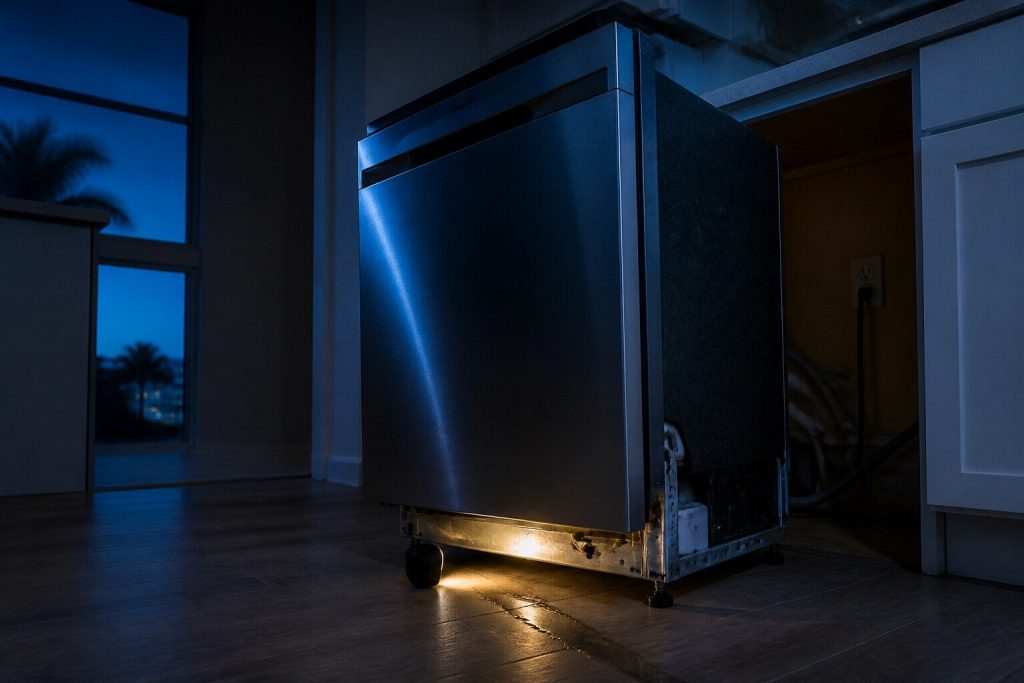
from $155 Dishwasher leak repair
Samsung's LC code is the leak sensor in the base pan, and it finds water long before your floor does. When it triggers, the machine turns itself on and will not turn off while it pumps the water away — which alarms people, and is exactly the right behavior. This is the repair most worth doing early, because the cheap version is a hose.
- LC and LE traced to the source rather than reset
- Base pan, door seal, hoses and the sump gasket checked in turn
- On WaterWall machines the reflector is checked, because it can report the same
-
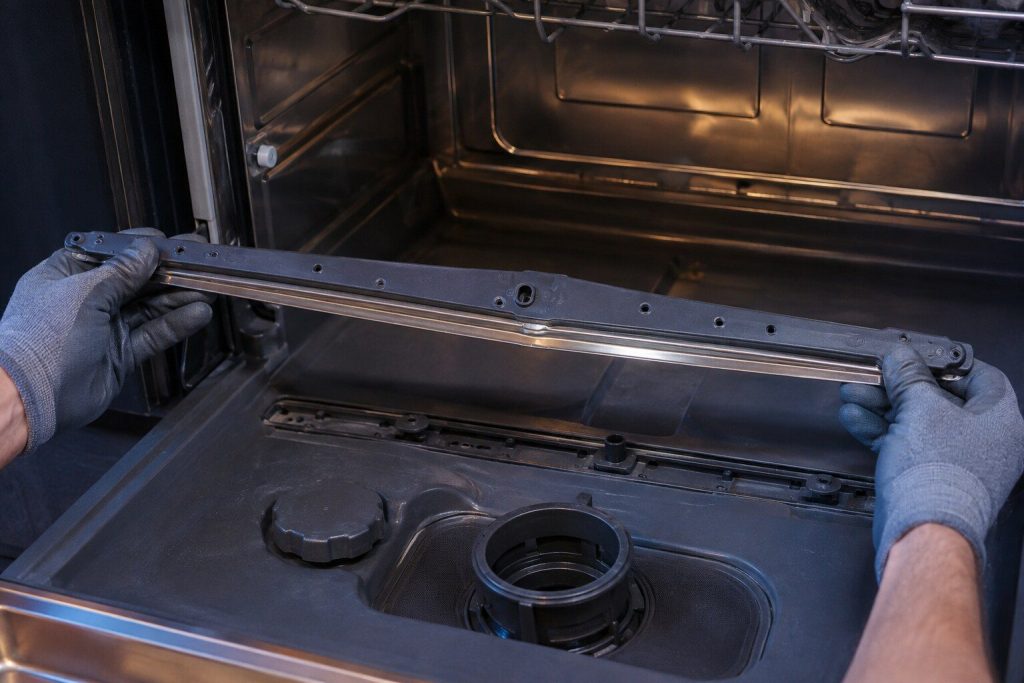
from $165 WaterWall reflector repair
A repair that only exists on Samsung. WaterWall machines sweep a reflector along the bottom of the tub to make a moving wall of water, and code 7E means it cannot travel properly. The most common cause is not the mechanism at all — it is a pan handle or a long utensil hanging through the lower rack into its path.
- 7E checked for obstruction before anything is opened
- Track, drive and reflector inspected as one mechanism
- Loading advice that stops it happening again
-
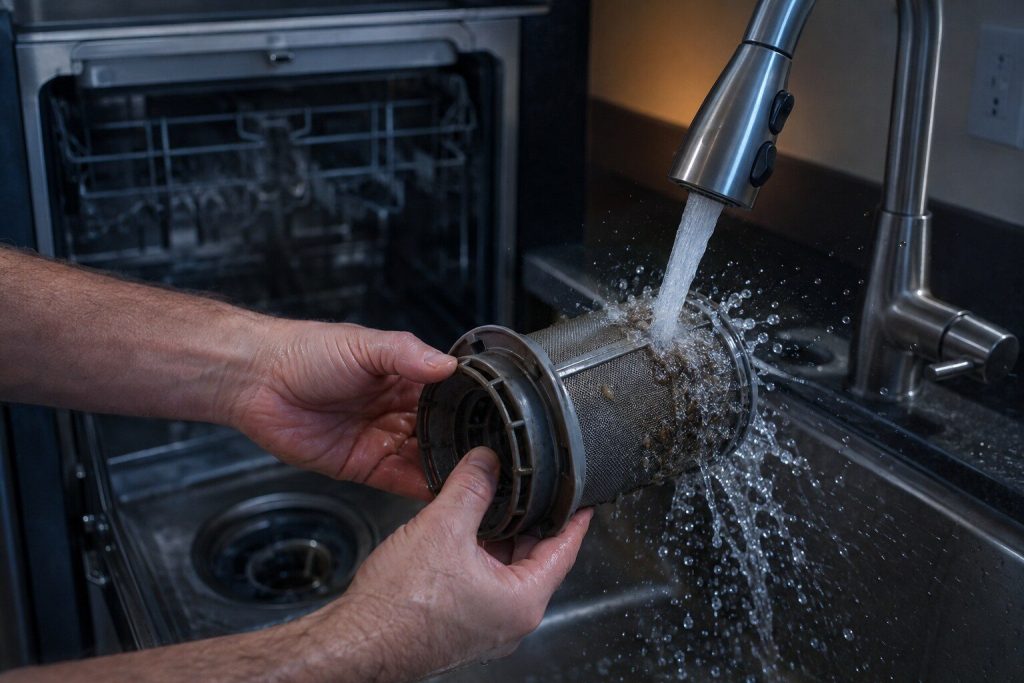
from $125 Dishwasher wash performance service
Dishes coming out with food on them, film on the glasses, or wet at the end of the cycle, with nothing flashing and nothing obviously broken. Samsung makes a point that matches our experience: when a dishwasher is genuinely failing, it usually shows up as filling, draining or an error as well. Cleaning alone is more often loading, detergent, water temperature or a blocked arm.
- Spray arms, filters, detergent and water temperature checked together
- Zone Wash, Linear Wash and WaterWall each have their own failure shape
- Honest advice, including when the answer is not a repair
-
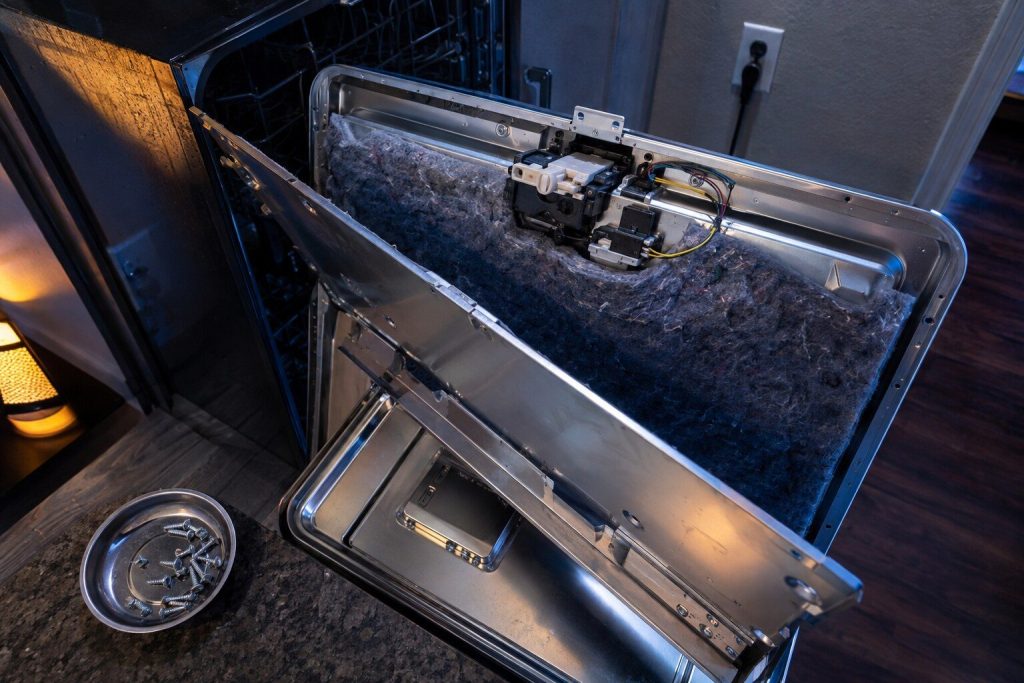
from $135 Dishwasher door latch repair
A dishwasher that will not start, or one that stops partway with the door apparently closed. Samsung reports it as a door condition on machines with a display and as a light combination on the rest, and the cause is nearly always mechanical: a latch, a strike, or a rack pushed out just far enough to hold the door off its catch.
- Latch, strike, hinge and door alignment before the switch
- AutoRelease doors handled as the mechanism they are
- The cheapest repair on the dishwasher list
-
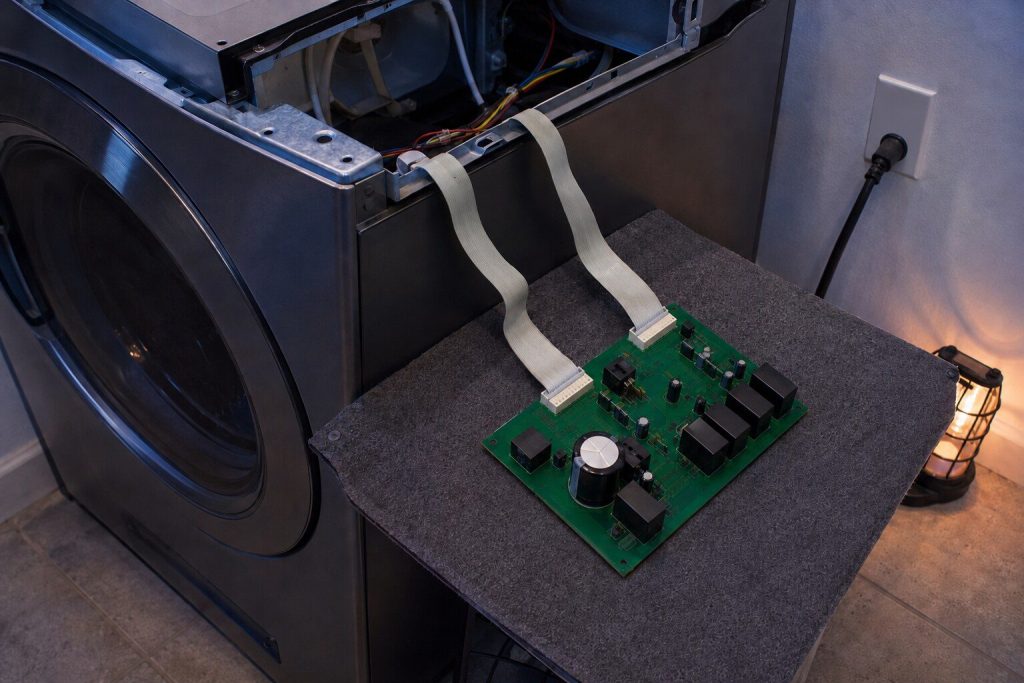
from $265 Appliance control board repair
The most expensive part in most of these machines and the one most often blamed for something else. Communication codes — CE on a dishwasher, AC on a dryer, C-F0 on a range — mean two boards have stopped agreeing, and the connection between them is checked before either one is quoted.
- Harnesses and connectors checked before either board
- Boards measured rather than swapped on suspicion
- Model configuration handled, because a new board needs it
-
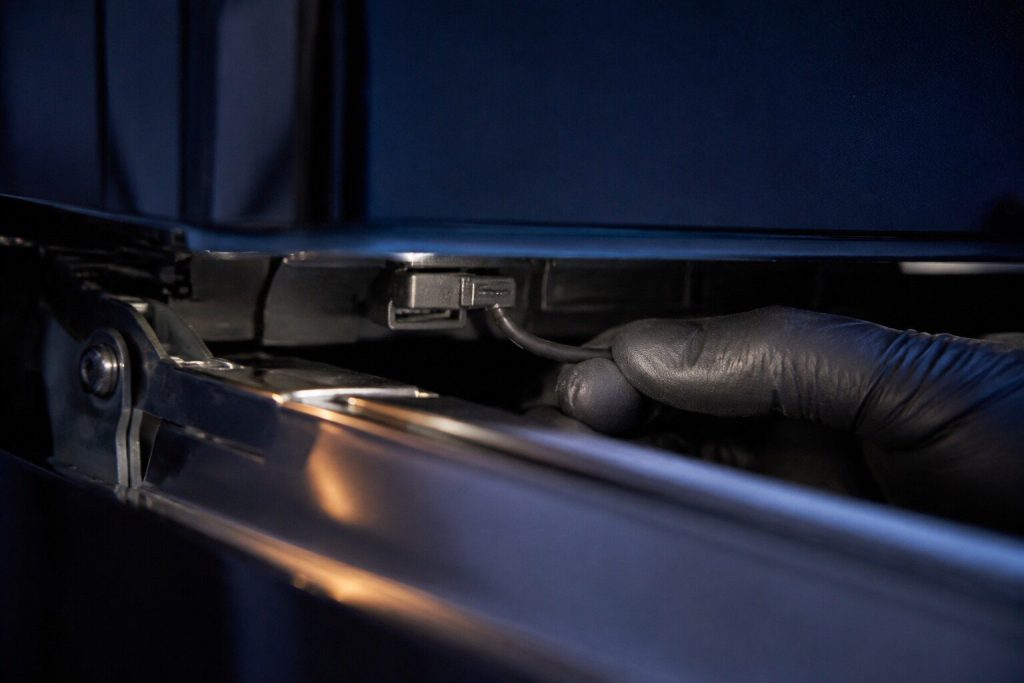
from $95 Smart diagnosis and firmware service
A visit that exists because on this make software is sometimes the repair. Samsung names specific models where a code is resolved by a firmware update rather than a part — C-F0 on three induction ranges, the 9C1 a stacked washer reports for its dryer — and a Family Hub refrigerator can hand over a stored list of every code it has recorded.
- Family Hub self check read and written down
- SmartThings connection, updates and the fixes Samsung publishes for them
- The cheapest visit on the site, and sometimes the only one needed
In more detail
About Samsung dishwashers
Two ways to say the same thing
A Samsung dishwasher with a digital display shows a code: 1E or IE, 3C, 3E, 4C, 5C, 7E, LC, OC, and the rest of the seventeen the maker publishes. The same machine without a display blinks its cycle lights, and Samsung publishes forty combinations with a meaning for each. Both are on this site, and the blinking-light pages are filed as signals rather than codes because that is what they are — documented by the manufacturer, in the manufacturer's own words, which is exactly the line between a signal we can publish and a guess we cannot.
Three wash systems, three different failure shapes
StormWash uses a dedicated high-pressure zone; Linear Wash moves a bar along the tub; WaterWall sweeps a reflector across it and has a code of its own, 7E, for a reflector that cannot move. Knowing which one you have changes the diagnosis before we arrive, and it is usually printed on the front of the machine.
Do not clear the code first
Samsung asks this explicitly and it is the rare piece of manufacturer advice that is aimed at the technician rather than the owner: resetting before troubleshooting does not fix the cause, and it takes away the one piece of evidence the machine had to offer.
This article is based on:
- Official manufacturer documentation
- Internal repair procedures
- Technician repair history
- Company quality standards
Before you book
Questions about Samsung dishwashers
The cycle lights are blinking and there is no code. What does that mean?
It is a code — Samsung's models without a digital display report errors by blinking the cycle lights instead, and the maker publishes what each combination means. Forty of them. Heavy and Express 60 together is one thing, Smart Auto and Heavy is another, and all four lights at once is a third. Write down exactly which lights are blinking before you turn it off; that is the whole diagnosis on these models, and it disappears the moment you clear it.
It shows LC or LE and there is no water on the floor.
That is the leak sensor, and Samsung's own wording is that moisture is detected where it does not belong. It does not promise you a puddle: the sensor sits in the base, so a slow weep from a hose or a seal reaches it long before it reaches your kitchen. It is a real signal and worth acting on early, because the cheap version of this repair is a hose and the expensive version is what happens after the water has been there a while.
It will not drain, or there is standing water in the bottom.
Samsung's drain code is 5C, SC, 5E or SE depending on the panel, and the sequence that solves most of them is the filter, then the drain hose and its high loop, then the air gap or disposer connection, then the pump. Three of those four are things we can check in the first ten minutes of a visit, and a surprising number of them are the disposer knockout plug that was never removed when the machine was installed.
Dishes are not getting clean but nothing is flashing.
Samsung's own guide makes a point worth repeating: when something is genuinely wrong with the machine, it usually shows up as filling, draining or an error as well. Cleaning alone, with everything else normal, is far more often loading, detergent, water temperature or a blocked spray arm — and on WaterWall and Linear Wash models, a reflector or bar that is obstructed. We will tell you on the phone if that is what it sounds like.
Where we do it
Across Miami-Dade, Broward, and Palm Beach
Same terms everywhere we go: an on-site diagnostic first, the price agreed in writing, and the exact figure confirmed once we have seen the unit.
Neighborhoods people ask for by name