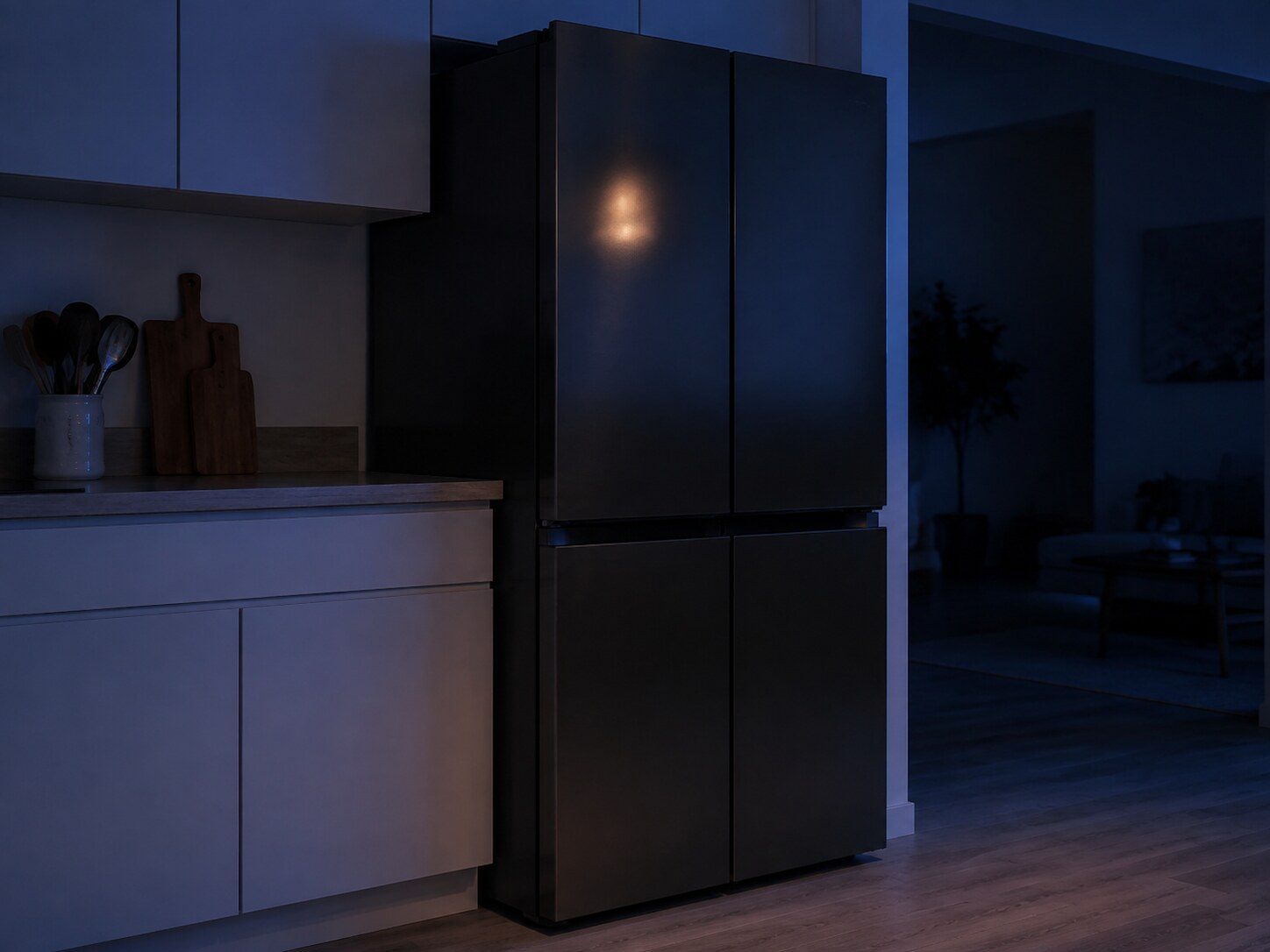
Appliance
Samsung refrigerators
The largest part of what Samsung sells in this country, and the appliance behind most of the calls we take on this badge. Seventy-seven of them are in Samsung's own catalog right now, fifty-one of those Bespoke, and the majority of what goes wrong in a South Florida kitchen is not the sealed system — it is ice, water, a fan that has frozen up, or a door that stopped sealing in a house where the air is wet nine months of the year.
- 8 symptoms we are called out to
- From $95 diagnostic, credited to the repair
- 59 cities and neighborhoods covered
- OEM parts available on order
The short version
What this equipment is, for a repair
Configurations
French door · 4-Door Flex · side-by-side · top and bottom freezer · Bespoke panels
Access
Planned before the visit, not discovered on arrival
Parts
OEM, available on order
Diagnostic
From $95, credited to the repair
What goes wrong with it
Symptoms we are called out to on Samsung refrigerators
Each one covers the likely causes in the order they are worth checking, and what to do in five minutes before booking anything.
-
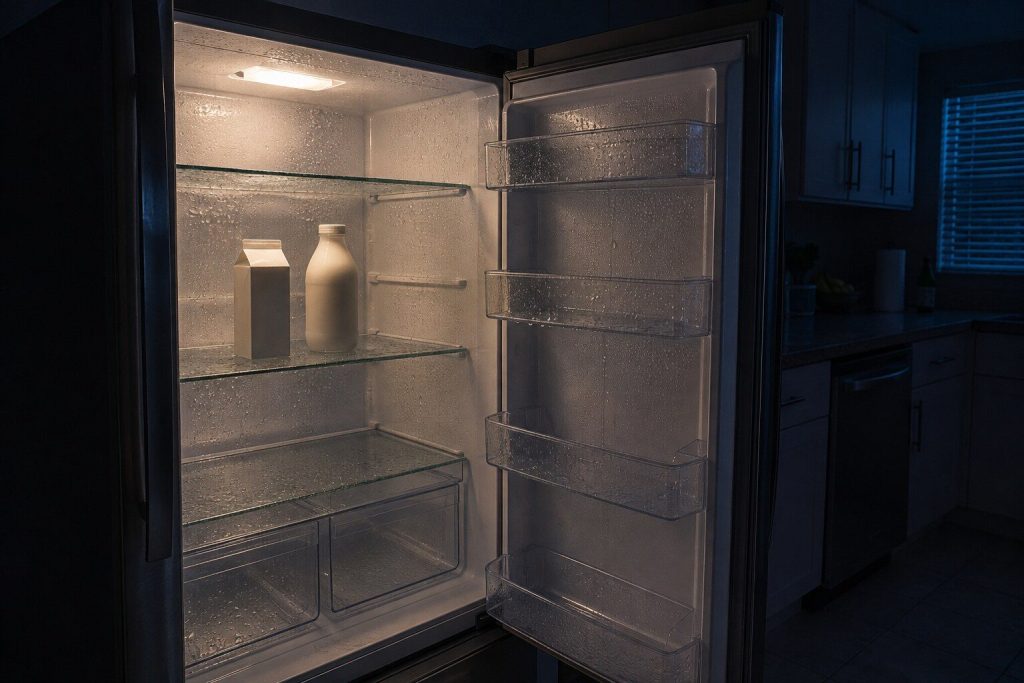
The lights are on and the food is warm Refrigerator not cooling
The most common call on this badge, and the one where the first check is free. Before anything else is considered, a Samsung refrigerator has a mode that lights the whole panel and does not cool at all — and it gets switched on at home by accident often enough that we ask about it on the phone.
- Cooling Off mode looks exactly like a broken refrigerator and costs nothing to clear
- Two fan codes, and the usual cause of both is ice rather than a dead motor
- The sealed system is last and it is measured, never assumed
-
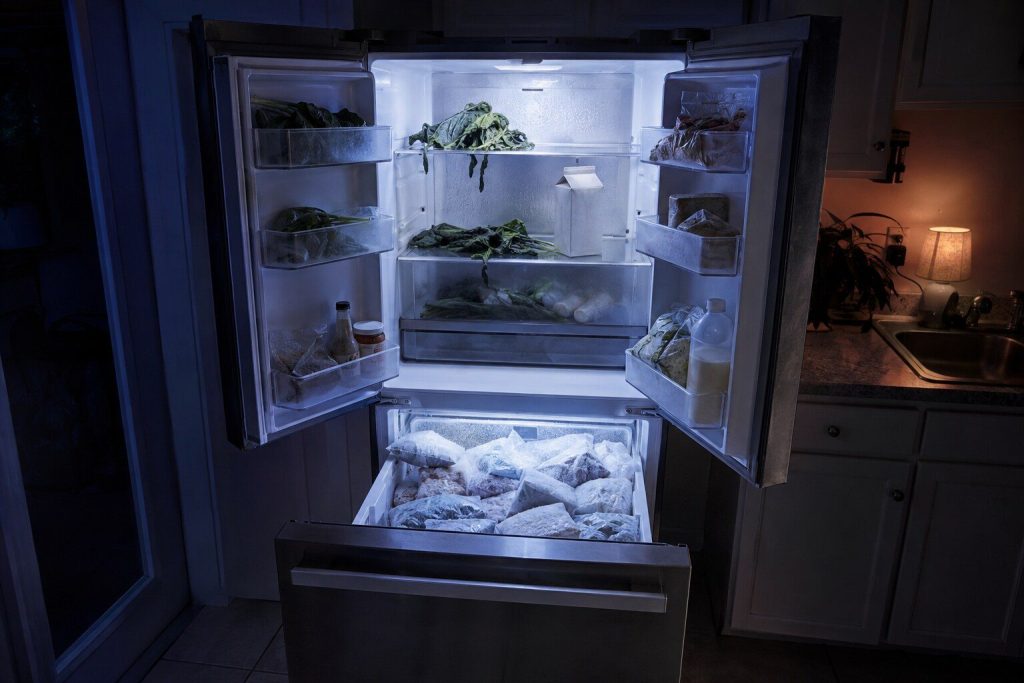
One compartment is fine and the other is not Fridge warm and freezer cold
The most diagnostic thing a two-compartment cabinet can tell you, and worth saying exactly that way when you call. In most Samsung cabinets one cooling system serves both sides, so a split like this points at how the cold is being moved rather than at whether it is being made.
- One system, two compartments — so this is airflow rather than cooling
- The damper between the two is a real and repairable part
- It usually means the compressor is healthy, which is good news
-

Water inside the cabinet or on the floor Refrigerator leaking water
Where the water shows up is what identifies it, so it is worth looking before you mop. Water under the crisper drawers, water on the floor at the front, and water at the back of the cabinet are three different repairs, and on this make one of them is a small heater that costs very little.
- Where the water sits narrows it more than anything else
- A blocked defrost drain is the most common cause and it is inexpensive
- The water line and the filter head are the other half
-

Buzzing, knocking, or a sudden new sound Refrigerator making noise
Most refrigerator noises are normal and a few are urgent, and the two are told apart by what the sound is doing rather than how loud it is. A new noise that comes and goes with the fan is worth attention; a new noise that arrived with a bang and then stopped is usually ice.
- A fan ticking against ice is the most common new noise on this make
- Some sounds are the cabinet working as designed
- Record it — noises are hard to describe and easy to play back
-
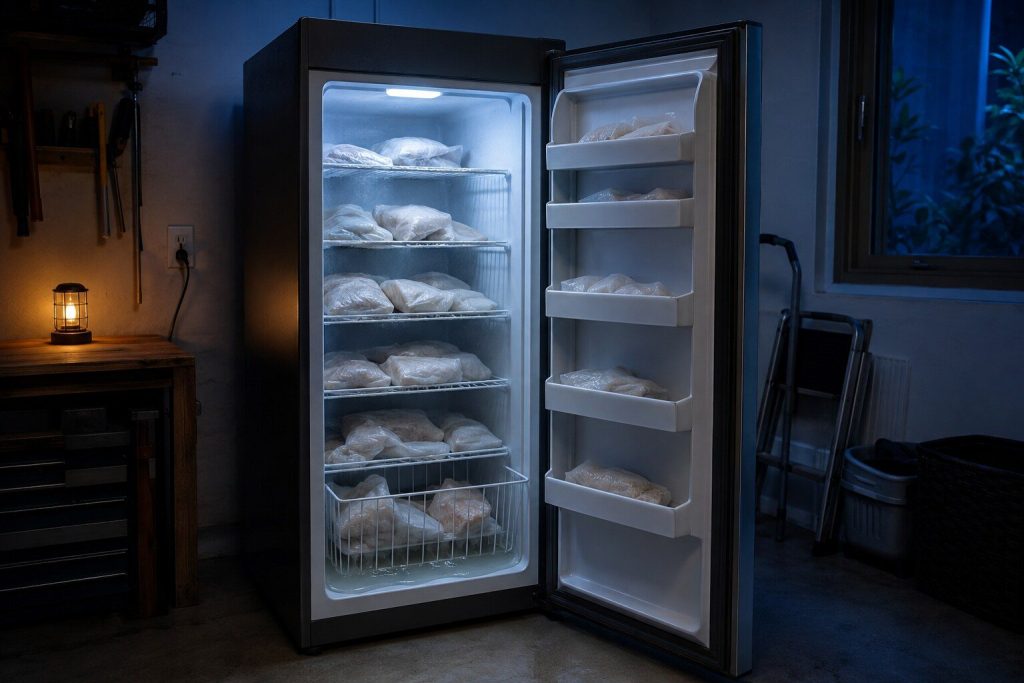
Soft ice cream, and everything else on its way Freezer not freezing
A freezer that has drifted up a few degrees does not announce itself — the food looks fine until it does not. On this make there is no freezer code table at all, so what the compartment is doing is the entire evidence, and the first thing to establish is whether the cabinet is convertible.
- A FlexZone or 4-Door Flex compartment may simply be set to refrigerate
- Samsung publishes no freezer codes — the symptom is the diagnosis
- Airflow and door seal before anything expensive
-
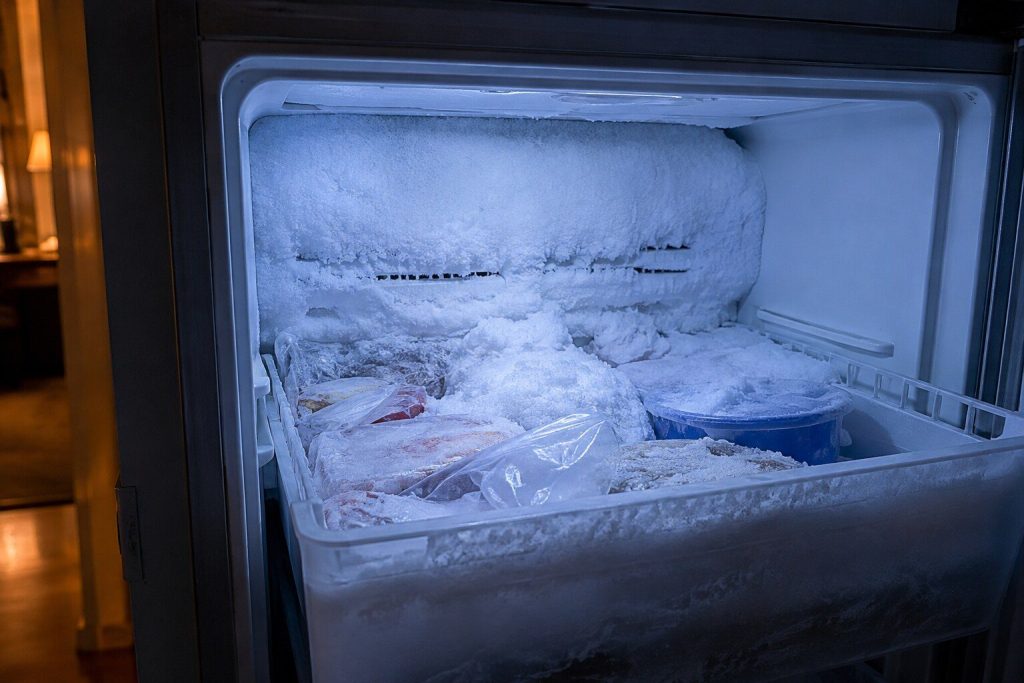
Ice that comes back after you clear it Frost building up in the freezer
A little frost is normal. Frost that returns within days of being cleared is not, and it is one of the more useful complaints because it narrows things quickly: something is letting moisture in, or the circuit that clears it has stopped working.
- Frost that returns is a door or a defrost circuit, not a mystery
- Frost around the ice bucket specifically is usually its own seal
- Clearing it without finding the cause buys about a fortnight
What we do on it
Repairs we carry out on Samsung refrigerators
Starting figures for this equipment in South Florida. The exact cost is confirmed after an on-site diagnostic — and this is not the whole list of what can go wrong, so call if your problem is not here.
-
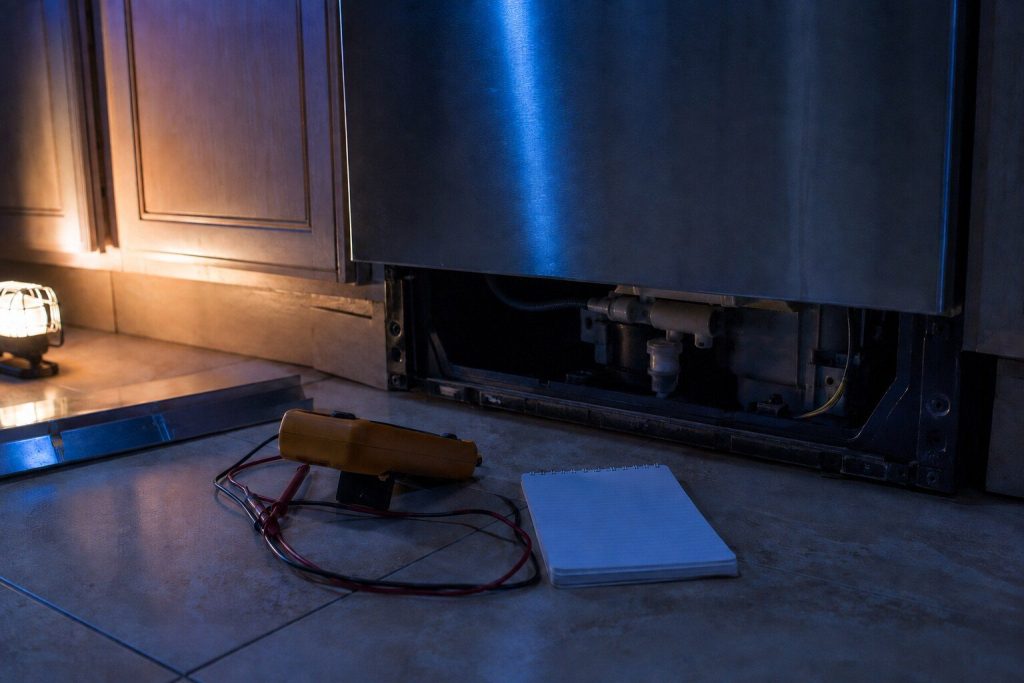
from $95 Diagnostic visit
One visit, one technician, one answer in writing. On this make the diagnostic starts with something most makes cannot offer: the appliance usually has something to say. A code, a combination of blinking lights, or on a Family Hub refrigerator a stored list of everything it has recorded. Reading that properly is half the job, and it is free to do.
- The model number and what the appliance is reporting, read before anything is opened
- Blinking lights and Family Hub self-check included, because they are codes on this make
- Written findings and a from-price before any part is ordered
-
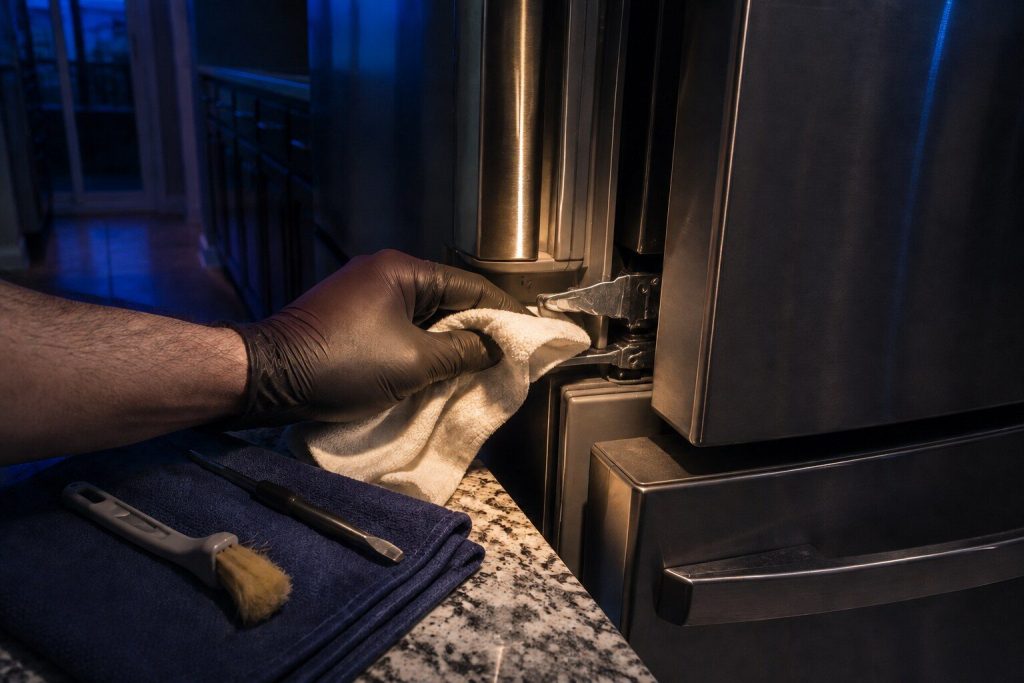
from $125 Appliance maintenance
An annual visit for the things that fail slowly enough that nobody notices until they stop. In this climate that list is longer than it would be anywhere dry: condenser coils, door gaskets, dryer ducts, dishwasher filters and the drum of a front-load washer all degrade quietly, and every one of them is cheaper to maintain than to repair.
- Condenser coils, gaskets and door seals checked and cleaned
- Dryer duct and lint path, which is the one that matters most
- Filters, drains and water lines on everything that uses water
-
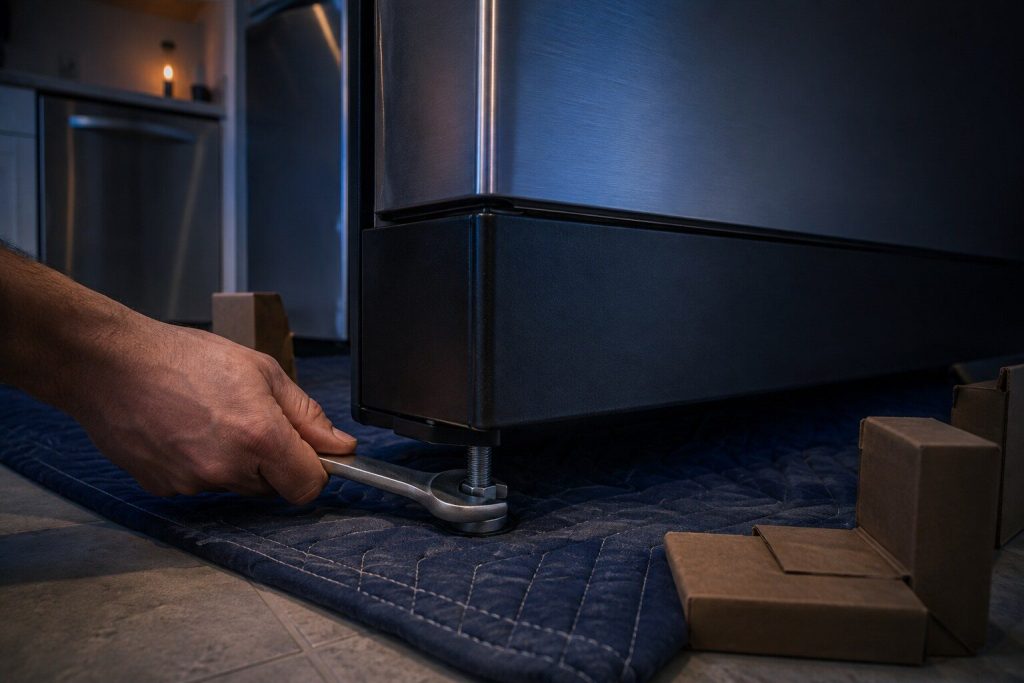
from $145 Appliance installation
Fitting an appliance so that it works the way it was designed to, and so that the next person who has to service it can reach it. A surprising share of the calls on this site are installation errors surfacing months later — hoses crossed, a dishwasher drain plug never removed, a dryer vent crushed behind the machine.
- Levelled, connected, tested and left working
- Water, drain and vent connections done properly rather than quickly
- Old appliance disconnected and moved out
-
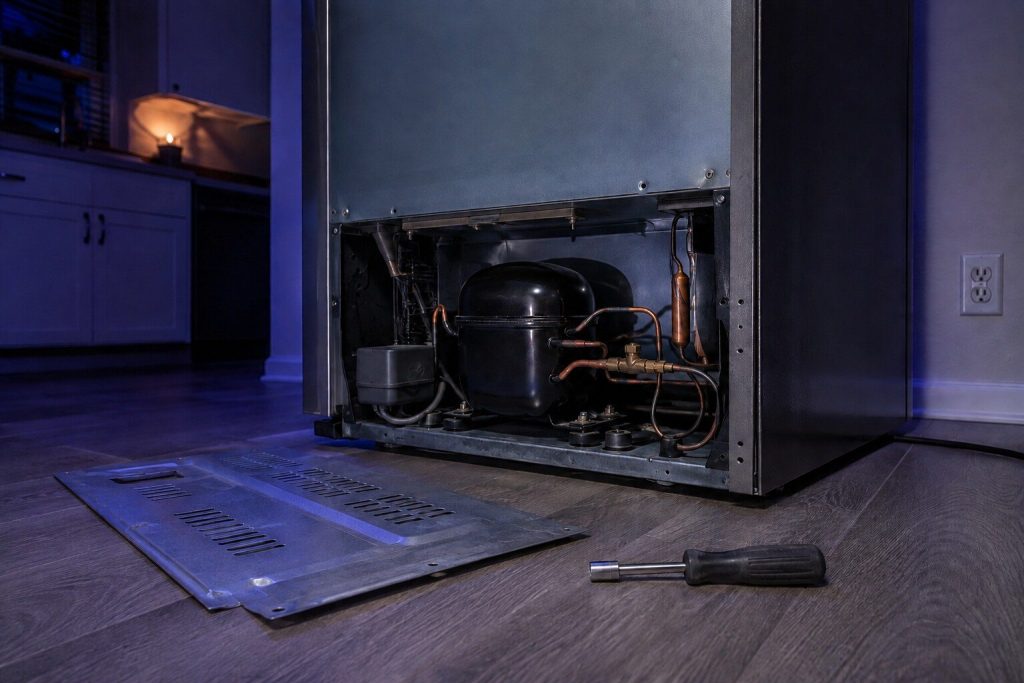
from $155 Refrigerator not cooling repair
The call we take most often on this badge, and the one with the widest range of answers behind it — from a mode that got switched on by accident and costs nothing, to a sealed system. The order we work in is the order that saves you money, and the first thing we eliminate is free.
- Cooling Off mode eliminated first — it costs nothing and it is common
- Airflow, fans and defrost before anything sealed
- Temperatures measured in both compartments, not read off the panel
-
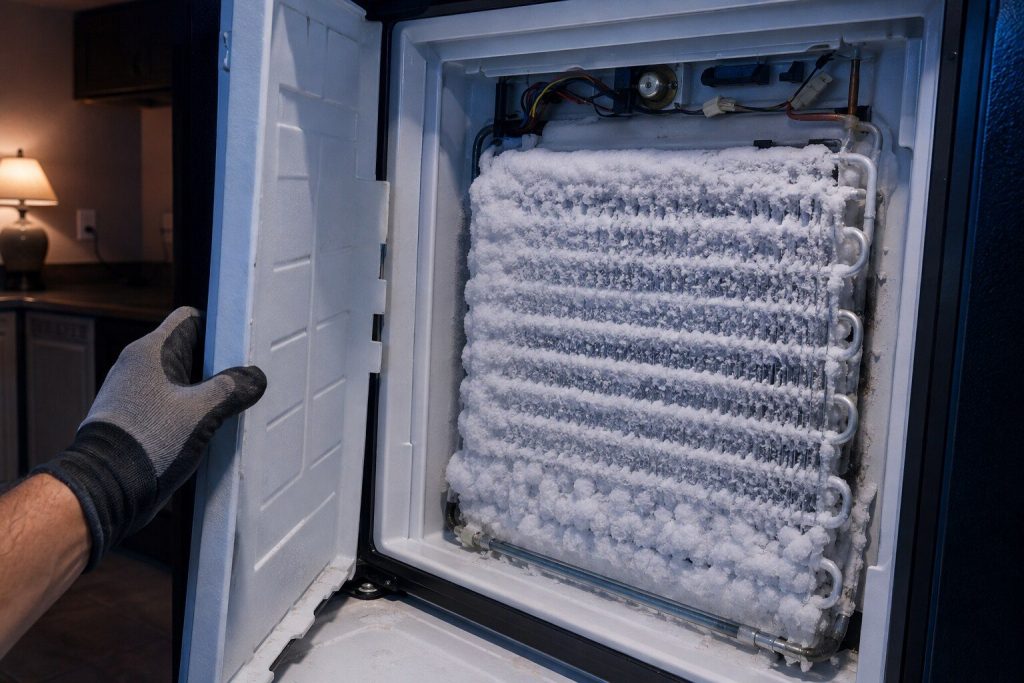
from $175 Defrost system repair
The failure that presents as a refrigerator getting slowly warmer over several days while the freezer seems fine. Frost builds on the evaporator until air can no longer pass through it, and by the time anyone notices the temperature, the ice has been building for weeks.
- Heater, thermostat and sensor tested rather than replaced together
- The evaporator inspected once it is clear, not guessed at
- The cause of the frost addressed, not just the frost
-
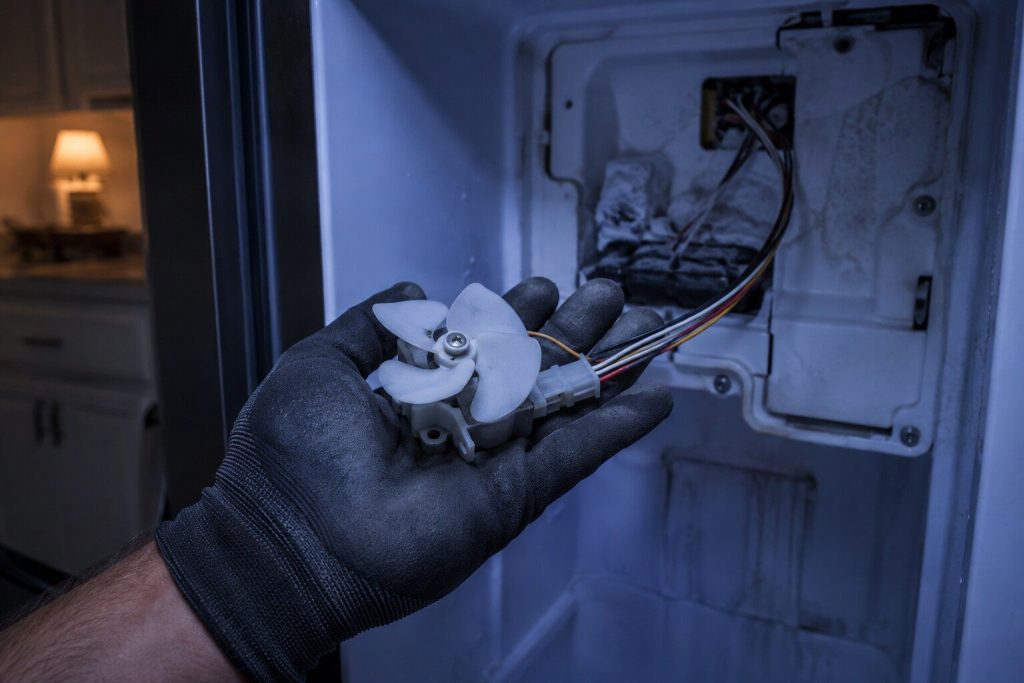
from $165 Evaporator fan repair
Samsung publishes two codes for this — 21E for the freezer fan and 22E or 22C for the fridge fan — and in their own explanation the usual cause is a fan that has frozen up rather than a motor that has died. That distinction is worth money: one is a defrost and a gasket, the other is a part.
- 21E and 22E diagnosed properly rather than answered with a motor
- The reason the ice got there is part of the job
- Gaskets and door closure checked at the same visit
-
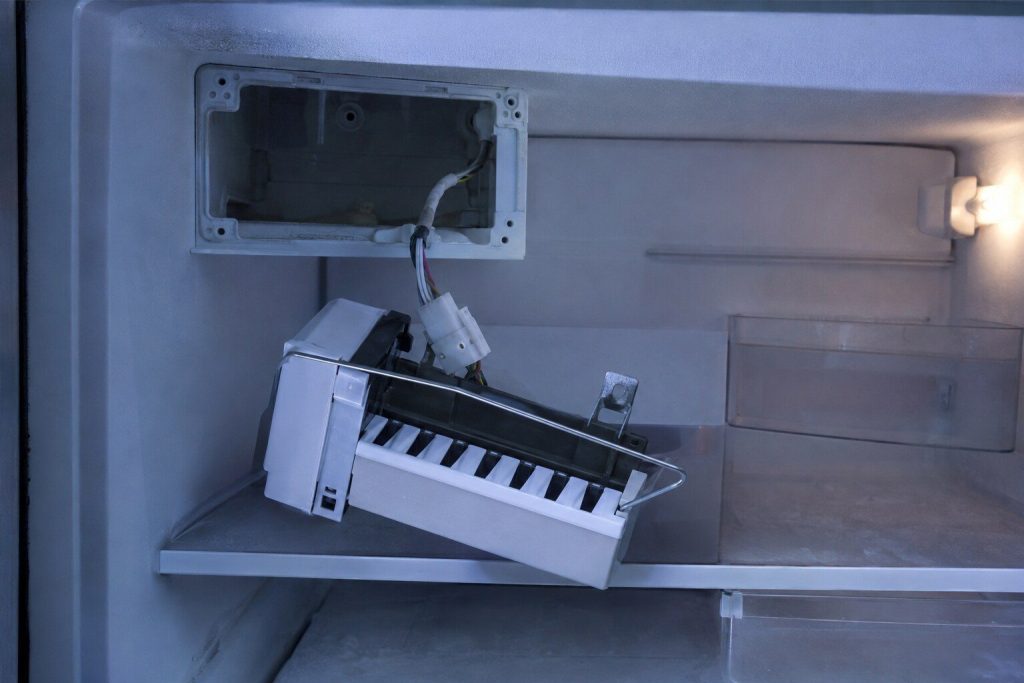
from $155 Ice maker repair
The single most common repair on Samsung refrigeration, and the one where the diagnosis matters most, because five different mechanisms live under one complaint. Samsung publishes five separate reset procedures — one per cabinet layout — and no error codes at all, so what the machine is doing is the entire evidence.
- Five cabinet layouts, and the right procedure for the one you have
- Frozen solid, not filling, not releasing, over-producing, leaking
- Fill tube, heater, sensor and module told apart before anything is ordered
-

from $145 Ice fill tube and heater service
A specific and very common version of the ice-maker call. There is a small heater around the tube that fills the ice maker, and its only job is to stop that tube freezing shut between fills. When it stops working the tube ices over and the machine quietly stops making ice. Samsung publishes a code for it — 33E — and it is a heater rather than an assembly.
- 33E diagnosed as a heater rather than answered with a new ice maker
- Fill tube cleared and the supply pressure checked at the same time
- The far cheaper half of most no-ice calls
-
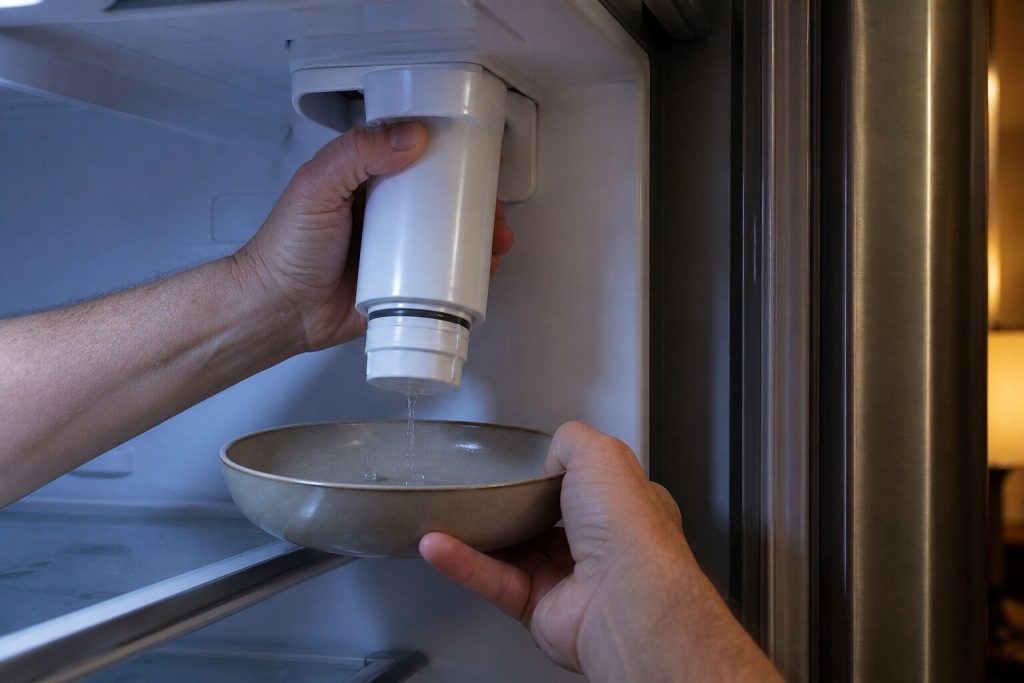
from $115 Water dispenser and filter service
Slow water, no water, water that tastes wrong, or a dispenser that drips after you let go. Most of it is the filter, the line or the valve, and in South Florida the filter interval printed on the box is optimistic — the water here is harder on a cartridge than the number assumes.
- Filter, line, valve and dispenser switch checked in that order
- Frozen lines in the door, which are a real cause here
- Genuine filters, and honest advice about the aftermarket ones
-
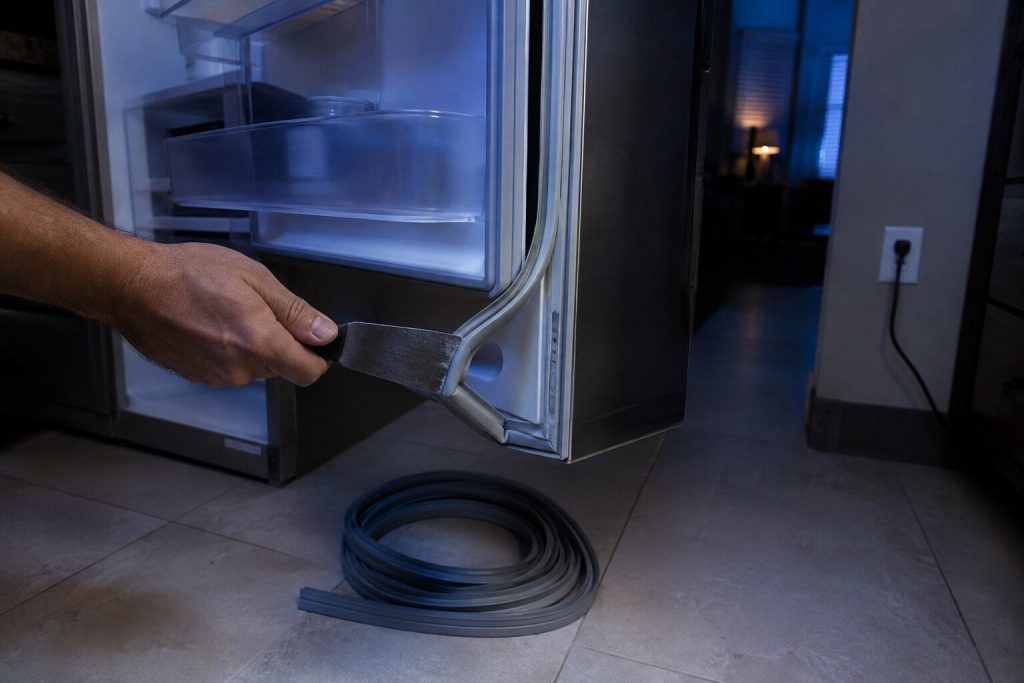
from $145 Door seal replacement
A gasket is the cheapest part in the appliance and the one whose failure costs the most, because it does not break, it degrades. Warm wet air walks in past a seal that has lost its grip, and the result presents as a cooling problem, an icing problem or a running-constantly problem long before anybody looks at the rubber.
- Tested with a note and a light rather than by eye
- Door alignment and hinge sag checked at the same time
- The same job on refrigerators, dishwashers, washers and ovens
-
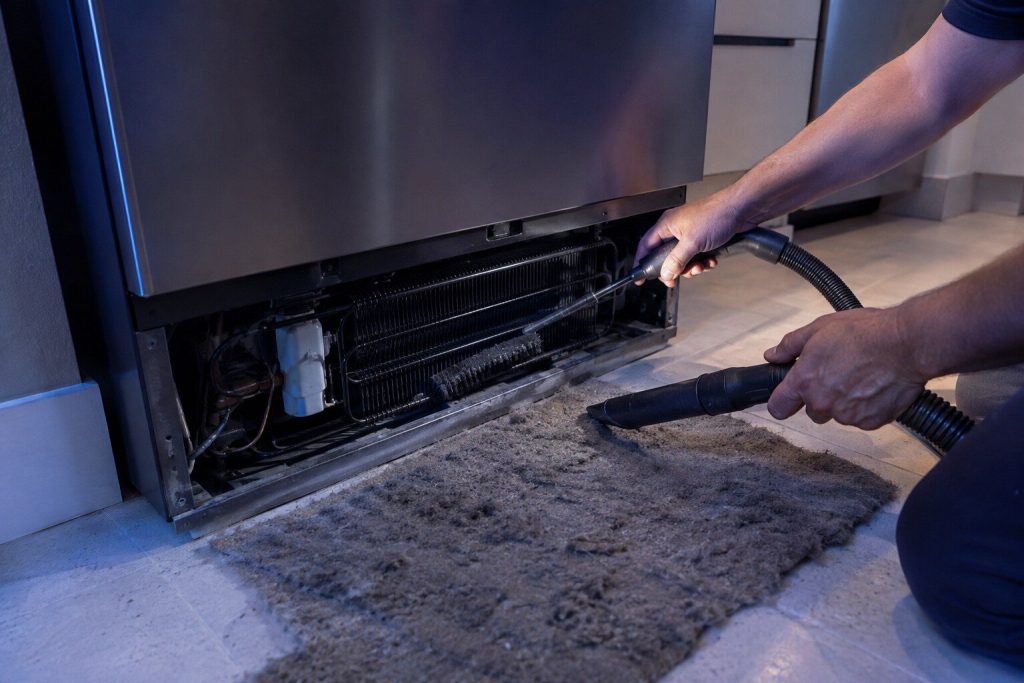
from $125 Condenser cleaning service
The maintenance job that prevents the most expensive repair on the site. A condenser that cannot shed heat makes a compressor work harder every hour of every day, and in a Miami kitchen a coil that has not been touched in five years is packed with the kind of dust that does not fall out on its own.
- Coil, fan and airway cleared properly
- Temperatures measured before and after
- The cheapest insurance against a sealed-system repair
-
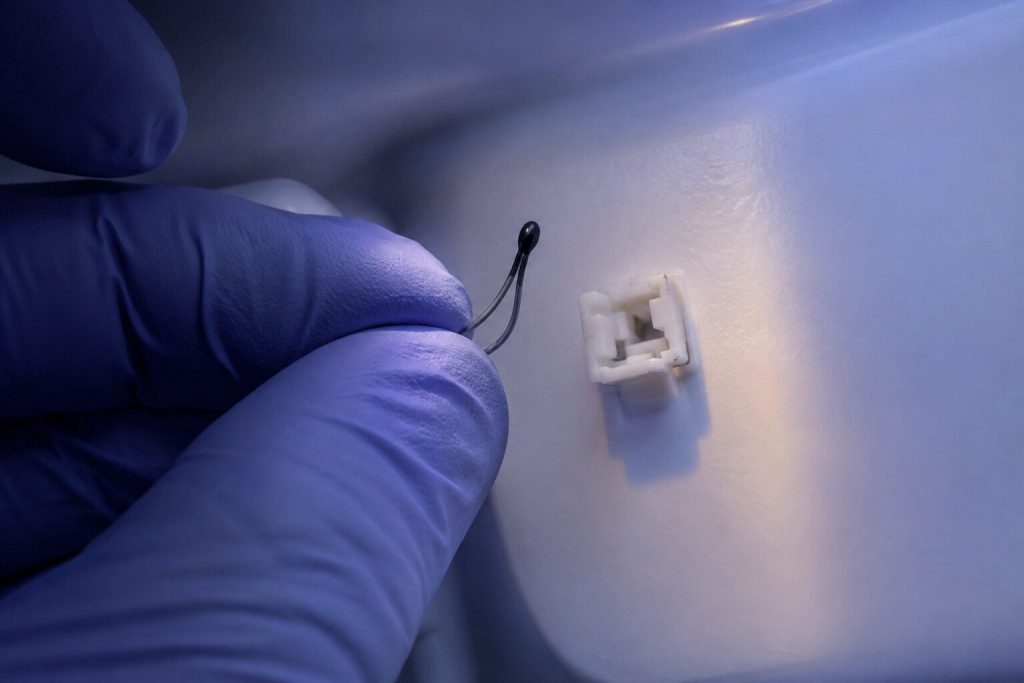
from $155 Temperature sensor replacement
A thermistor is a small, cheap part that decides large, expensive behavior. Samsung publishes sensor codes on almost every appliance it makes — tE on the washer and the dishwasher, the C-20 family on microwaves, 5E on the refrigerator — and the symptom is nearly always the same shape: something that heats or cools when it should not, or will not when it should.
- Measured against its own resistance curve, not swapped on suspicion
- The circuit around it checked before the part is blamed
- The same job across refrigeration, laundry and cooking
-
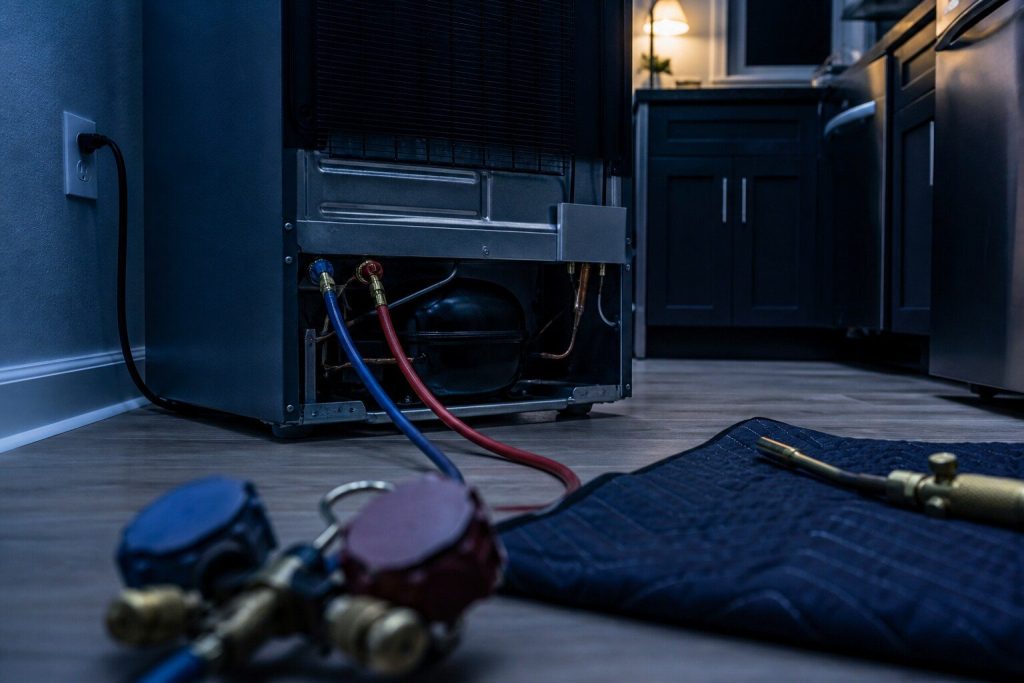
from $595 Sealed system repair
The compressor, the refrigerant and the closed loop between them. It is the one repair on this site where we will tell you honestly that replacement is sometimes the better answer, and it is also the one most often blamed for problems that turn out to be a fan, a gasket or a mode switched on by accident.
- Never diagnosed by elimination — it is measured
- An honest conversation about repair against replacement
- Recovery, repair, evacuation and recharge done properly
-
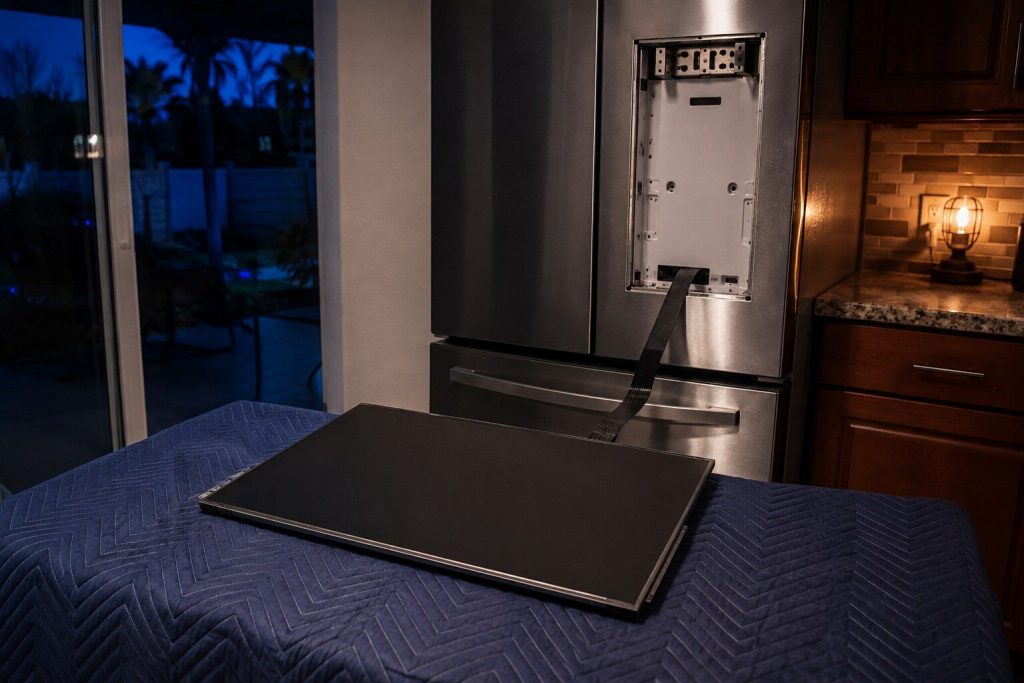
from $195 Family Hub screen repair
The screen in the door is a computer, and it fails the way computers fail rather than the way refrigerators do. Samsung publishes codes for it that no other make in this fleet has — 41C, 85C, the interior lights flashing blue — and a hidden power switch inside the right-hand door that restarts it. Most of these calls do not need a part.
- Software, updates and the internal restart tried before hardware
- 41C, 85C and the blue-light restart handled as Samsung documents them
- The refrigerator keeps cooling while the screen is dealt with
-
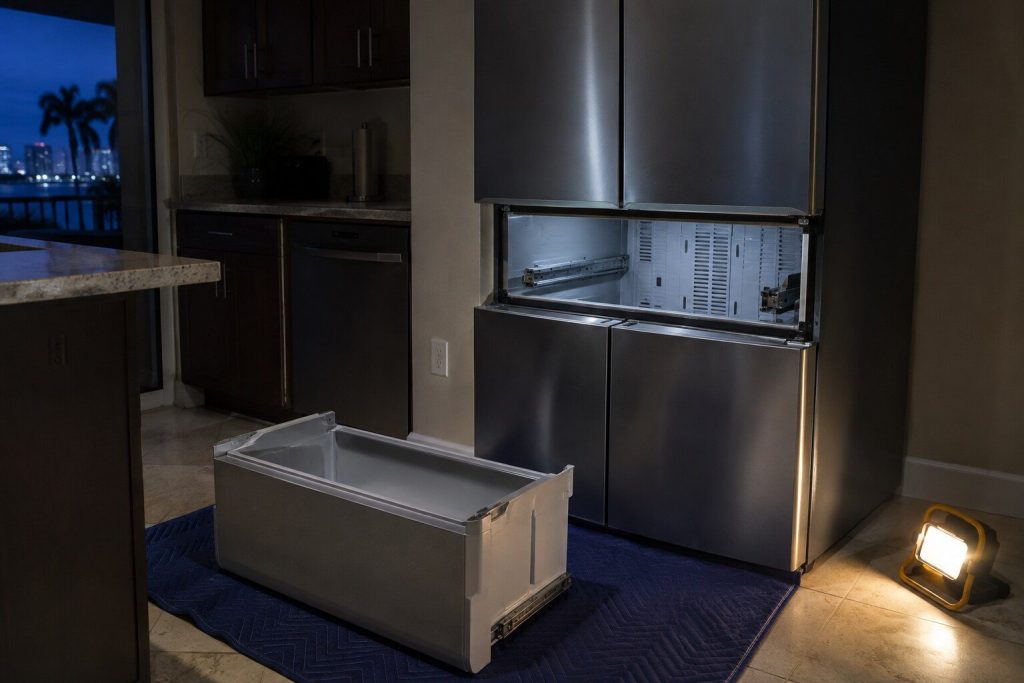
from $165 FlexZone compartment repair
A compartment that converts between refrigerating and freezing has its own damper, its own sensor and its own setting, which means it has three ways to go wrong that a fixed compartment does not. The first of those three is free, and it is the one we check first.
- The setting checked before anything is opened
- Damper, sensor and airflow to the compartment tested separately
- 4-Door Flex and FlexZone drawers alike
-
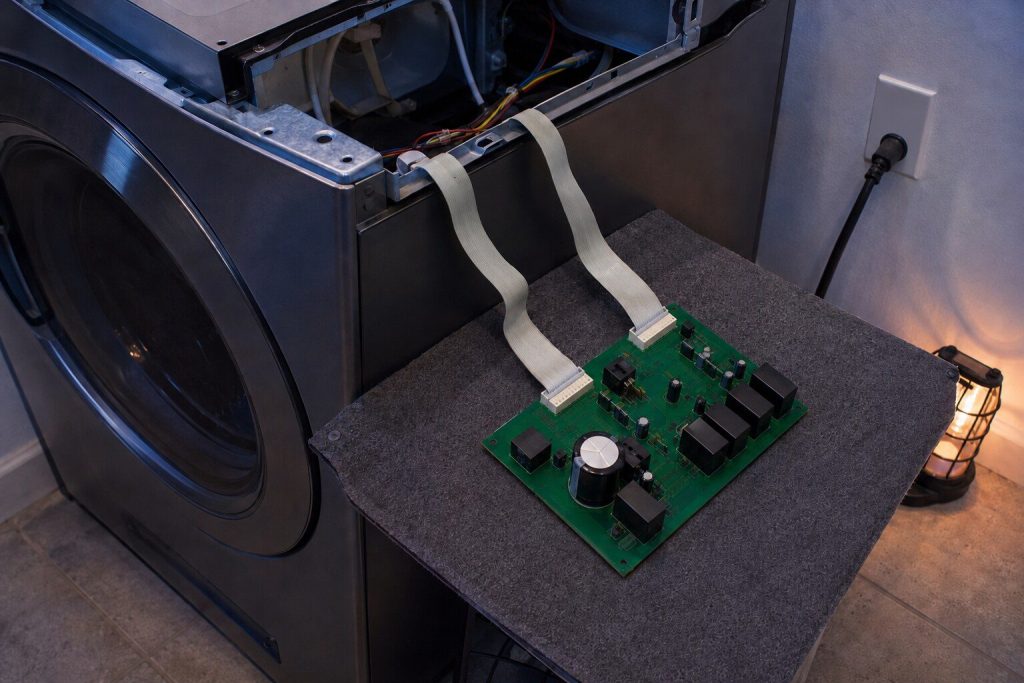
from $265 Appliance control board repair
The most expensive part in most of these machines and the one most often blamed for something else. Communication codes — CE on a dishwasher, AC on a dryer, C-F0 on a range — mean two boards have stopped agreeing, and the connection between them is checked before either one is quoted.
- Harnesses and connectors checked before either board
- Boards measured rather than swapped on suspicion
- Model configuration handled, because a new board needs it
-
from $95 Smart diagnosis and firmware service
A visit that exists because on this make software is sometimes the repair. Samsung names specific models where a code is resolved by a firmware update rather than a part — C-F0 on three induction ranges, the 9C1 a stacked washer reports for its dryer — and a Family Hub refrigerator can hand over a stored list of every code it has recorded.
- Family Hub self check read and written down
- SmartThings connection, updates and the fixes Samsung publishes for them
- The cheapest visit on the site, and sometimes the only one needed
In more detail
About Samsung refrigerators
Four cabinet layouts, and Bespoke across all of them
Samsung's current US catalog carries 77 refrigerators: French door in three- and four-door forms, the 4-Door Flex whose bottom-right compartment converts between fridge and freezer, side-by-side, top-freezer and bottom-freezer, plus counter-depth versions of most of them. Fifty-one are Bespoke, which means the door panels come off and change color, and that matters to a repair in one specific way: a panel is a panel, and the machine behind it is the same machine. A cracked or dented panel is not a refrigerator problem.
What actually fails here, in this climate
Ice and water, first and by a distance. Then airflow — the two fan codes, the defrost circuit, and a cabinet loaded so full the doors do not quite close. Then doors and gaskets, which in a Miami kitchen carry a heavier load than they were designed for: warm wet air walks in every time the seal is imperfect, and the result looks like a cooling problem long before anyone suspects the seal. The sealed system — compressor, refrigerant, the closed loop — is a real failure and a rare one, and we will not quote you for it before it has been measured.
The codes Samsung publishes, and the ones it does not
Samsung publishes a short refrigerator table and we publish exactly that table: AP for access-point mode during Wi-Fi setup, 21E and 22E for the two fans, 41C and 85C and the flashing interior lights for Family Hub, 76C for water in the Autofill compartment, and a group of voltage codes. It publishes nothing at all for standalone freezers or for built-in ice makers, so we publish nothing for them either and send those pages to the symptom instead. That is a deliberate limit, not a gap.
This article is based on:
- Official manufacturer documentation
- Internal repair procedures
- Technician repair history
- Company quality standards

Before you book
Questions about Samsung refrigerators
It is running but it is not cold enough. Where does that usually end up?
Airflow first, and on this make that is not a polite way of saying nothing. Two of the codes Samsung publishes for its refrigerators are fan codes — 21E for the freezer fan and 22E or 22C for the fridge fan — and Samsung's own explanation for both is a fan that has frozen up after a door was left open or a gasket let go. A cabinet packed to the back wall does the same thing without any code at all. After that it is the defrost circuit, which shows as a compartment that gets slowly warmer over days while the other one stays fine. The sealed system is real and it is last, and it is measured rather than guessed at.
The ice maker stopped. Does the whole thing get replaced?
Usually not, and this is the single most common call on Samsung refrigeration. Samsung publishes five separate reset procedures for it — one for the ice maker in the fridge compartment, one for the back of the freezer door, one for a bottom freezer, one for a top freezer and one for cubed and Ice Bites — because the layout differs by cabinet and so does the fix. A large share of these calls end at a frosted compartment, a door that was not sealing, or a water line, and every one of those is cheaper than an assembly.
My Family Hub shows a code. Can I find out what it was?
Yes, and no other make in this fleet lets you do it. On the Family Hub panel, go to Apps, then Fridge Manager, then Fridge Settings, then Self Check, and start it: it lists the codes the refrigerator has recorded, current and past. Read them to us on the phone. It is the most useful thirty seconds you can spend before a visit, and it regularly changes what we bring.
Should I unplug it to clear a code?
Samsung says not to, and we agree with them for a practical reason: a code that has been cleared is information a technician no longer has. Their own guidance on the refrigerator code page is to leave it alone and not to poke at the panel trying to make it go away. The exceptions Samsung names itself are the voltage codes — 88 88, 83E, 85E, 86E — where a minute at the breaker is the first step and often the last.
Where we do it
Across Miami-Dade, Broward, and Palm Beach
Same terms everywhere we go: an on-site diagnostic first, the price agreed in writing, and the exact figure confirmed once we have seen the unit.
Neighborhoods people ask for by name