Common Problems
A Washer That Will Not Spin: Is It the Load or the Machine?
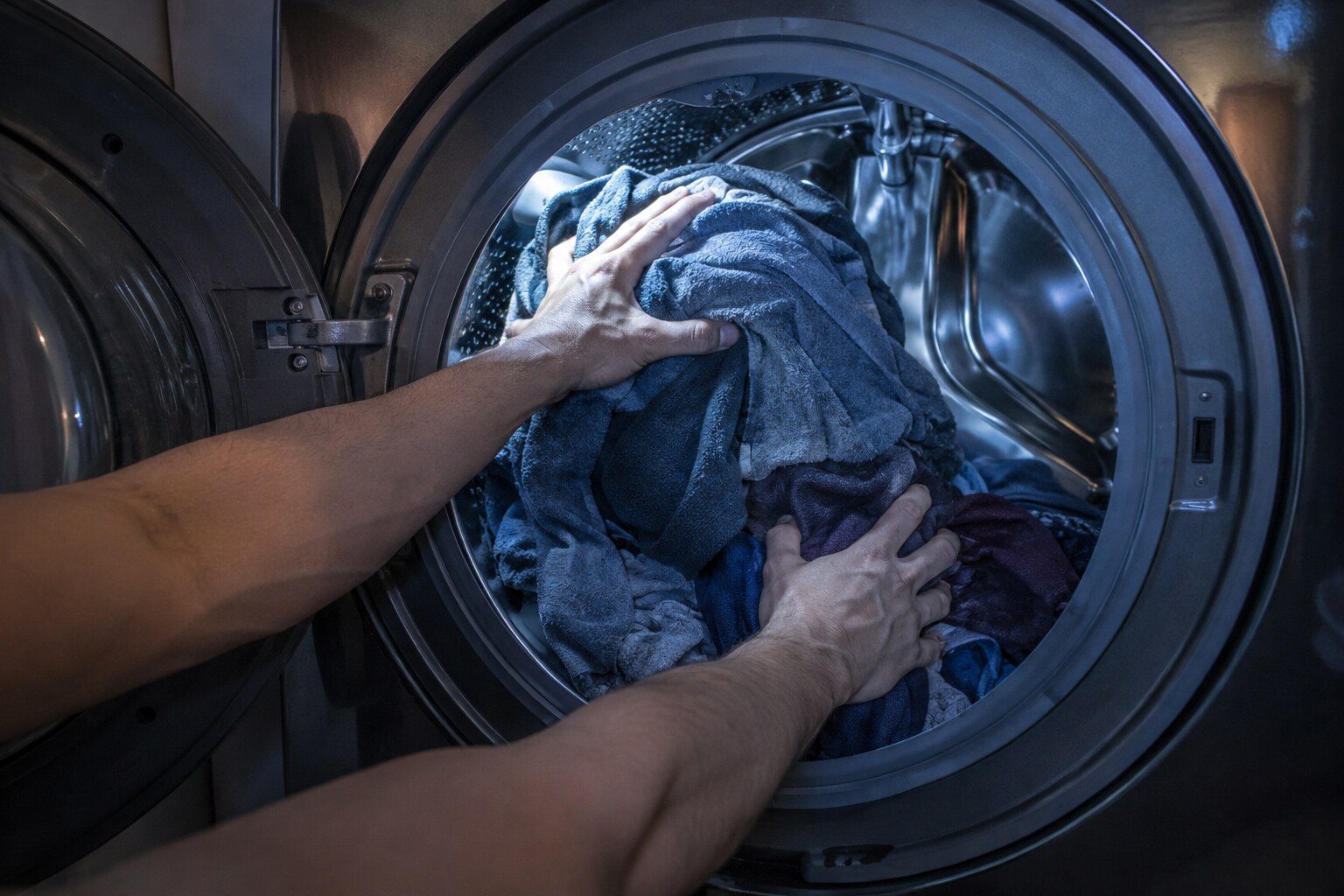
Take everything out, put in three or four similar towels spread evenly around the drum, and run a spin-only cycle. If it spins, the machine is healthy and the problem is loading — one heavy item, a duvet that has wrapped itself round everything, or a load that has all migrated to one side. If it will not spin that either, it is the machine, and the order is leveling first because it is free, then the door lock, then the suspension rods and shock absorbers, then the sensor that watches the drum. One thing to rule out before any of that: a washer that has not drained will never spin, and a drain problem is a different repair. Samsung's Ur code specifically means the machine is going to add water, redistribute and try again — it is telling you what it is doing rather than reporting anything broken.
The full guide
How do I fix my Samsung washer not spinning? The machine is probably right
This is the most common complaint on the most common appliance on this make, and the first thing worth saying is that Samsung's protection is usually working correctly.
A front-load washer spins at up to 1,200 revolutions a minute. At that speed a load that is bunched on one side generates enormous, rotating, off-center forces — enough to walk a machine across a floor, enough to destroy its own suspension, enough to damage the building it is standing in. So the machine measures how balanced the drum is before it commits, and if it does not like the answer it refuses.
Samsung reports that as Ub, U6 or UE. And it reports something slightly different as Ur: the machine is going to add water, try to redistribute the load, and have another go at the spin. Ur is not a complaint. It is the washer narrating what it is about to do, and it makes the cycle longer.
The ten-minute test
This settles the question better than any amount of reasoning.
Take everything out of the drum. Put in three or four similar items — bath towels are ideal — and spread them evenly around the drum rather than dropping them in as a lump. Close the door and run a spin-only cycle.
If it spins: the machine is healthy. The problem is the laundry, and specifically the kind of laundry. A single bath sheet, a duvet, a bathmat with a rubber backing, or a load of jeans that has all ended up on one side will stop any front loader, and no amount of repair changes that.
If it will not spin that either: now you have a machine problem, and everything below applies.
That distinction is worth ten minutes because it is the difference between a service call and a habit.
Two free things, before anything else
Did it drain? A washer will not attempt a spin with water in the tub, and it is right not to. If the drum is full, the complaint is the drain rather than the spin, and it is a different repair — the debris filter behind the lower front panel, then the hose, then the pump. Half of the calls that come to us as "will not spin" are actually "will not drain".
Is it level? Push each corner of the cabinet in turn. If it rocks at all, it needs leveling, and the feet adjust for exactly this. There are lock nuts on them and they matter: a foot that is at the right height and not locked will work its way loose again in a month.
A machine that is not sitting flat will never spin a heavy load cleanly, will trigger balance protection on loads a level machine handles, and will wear its own suspension out doing it. Leveling costs nothing and it is done on every visit we make for this complaint.
The door, and a Samsung specific
A front loader will not spin unless it is certain the door is locked. So a door problem presents as a spin problem, and Samsung's dC family covers it.
Two things about that are worth knowing on this make.
The first is that Samsung says itself that on some models dC is an unbalanced load rather than a door error. The same two characters, two meanings, and the model number is what settles which. Any advice that gives you one answer is wrong for half the range.
The second is a genuine Samsung quirk that costs nothing: on a FlexWash, a 1dC4 on the upper unit can be nothing more than a missing rubber button beside the latch. Fitting the button is the entire repair. It is documented, and it is worth checking before anybody quotes for a lock assembly.
What is left, in order
The suspension. Front loaders hang the drum on rods with dampers on them. Those wear, and when they do the drum moves further than the control expects during the ramp-up to a spin. The machine sees excessive movement and aborts. This is the most common genuine repair behind this complaint, and the tell is a machine that has been getting worse over months rather than one that failed overnight.
The shock absorbers. Same principle, different component, same symptom.
The Mems sensor. The part that tells the machine how the drum is behaving — vibration, tilt, the beginning of an unbalanced spin. When it stops reporting sensibly the machine loses its ability to judge, and Samsung reports it in the 8E family. On some models those same characters are a jammed button instead, which is the third of the four codes Samsung flags as meaning two things.
The motor and its speed sensor. Least common. A machine that hums and does not turn, or that tries and stops with a burning smell, belongs here — and that is the one version of this to stop testing and call about.
What to tell us on the phone
Three things, and they narrow it a long way before anybody drives out.
Whether the drum had water in it. Whether an even load of towels spins. And what the machine does at the moment the spin should start — tries and gives up, ramps up and aborts partway, or never attempts it at all.
Those three, plus the model number, usually get us to the right part before the visit rather than during it.

Questions people ask about this
It spins on some cycles and not others.
That fits load type rather than machine. Bulky items, or a small load with one heavy piece in it, are what produce this — and a cycle with a lower spin speed will often complete where a fast one aborts. It is a strong hint that nothing has failed.
The drum is full of water and it will not spin.
Then this is a drain problem wearing a spin problem's clothes. A washer will not attempt a spin with water in the tub, and it should not. Deal with the drain first: the debris filter behind the lower panel, then the hose, then the pump.
It walks across the floor when it spins.
Level it, and check the lock nuts on the feet are tight. A machine that moves is generating forces the suspension was not designed to absorb and is wearing out its own components doing it, so this is worth an afternoon rather than a shrug.
There is a burning smell when it tries to spin.
Stop using it and call. A motor or a belt being asked to turn something that will not move is the one version of this that gets worse quickly, and it is not a thing to keep testing.
Common Problems
More guides like this one
-
Water Under the Crisper Drawer, and the Small Blocked Tube Behind It
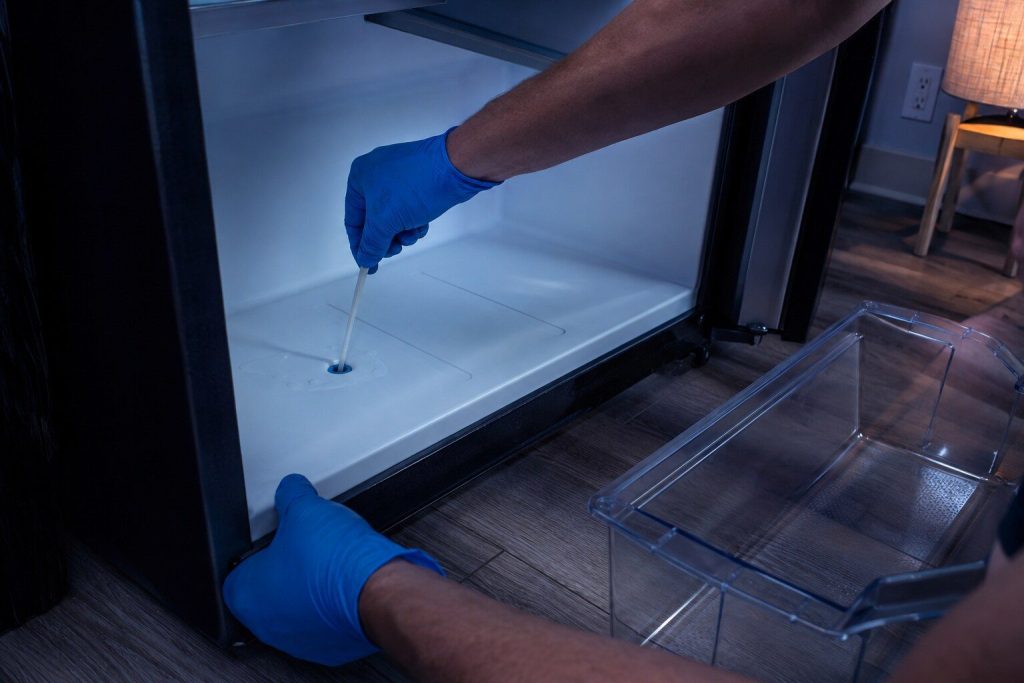
Water in that exact place is almost never the water line and almost never the filter. It is melt water that cannot get out, and the tube it should be leaving by has frozen shut.
Read more -
An Oven That Turns Itself On, and the Three Explanations
Three causes, and two of them are free to rule out. The third is worth acting on the same day, because an oven that heats without being asked is not a thing to live with.
Read more -
A Noise That Stops When You Open the Door Is Almost Always One Thing
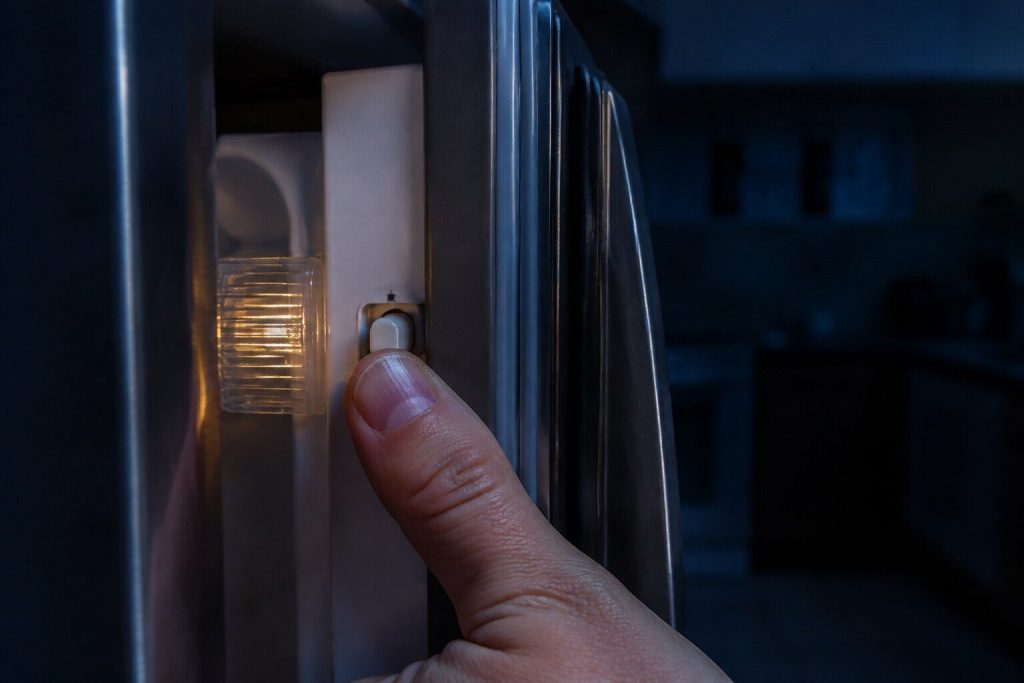
Opening the door cuts power to the evaporator fan. So a noise that stops the moment you open it is that fan — and on this make the usual reason is ice on the blade rather than a dead motor.
Read more
Tell us the model number and what it is doing.
This article is based on:
- Official manufacturer documentation
- Internal repair procedures
- Technician repair history
- Company quality standards