Common Problems
An Oven That Turns Itself On, and the Three Explanations
There are three explanations and they are easy to separate. The first is a delay start or a timed cook that was set by accident — free to rule out, and more common than people expect on a panel where a long press does something different from a short one. The second is a key on the capacitive panel being read as pressed, which Samsung reports in its C-d family and which locks out or triggers functions without anybody touching them. The third is a failed control board, where the relay that switches the element has stuck closed. The first two are inconvenient. The third means the oven can heat with nothing on the display, which is why the immediate action for an oven that has genuinely started heating on its own is to switch it off at the breaker until it has been looked at. Check the clock, the timer and any delay setting first, then press every key in turn to find one that is not behaving.
The full guide
What to do if my Samsung oven turns on by itself? Start by deciding which of two things is happening
There is an important distinction that gets lost in the panic, and it decides how urgent this is.
The display comes on. Lights, a beep, a mode showing, but the cavity stays cold. Annoying, and almost always a setting or a panel.
The oven actually heats. The cavity gets hot without anybody asking. That is a different matter and it is the one where the answer is to switch the circuit off while you work out why.
If you are not certain which you have, put an oven thermometer in the cavity and watch it for twenty minutes with nothing selected. And if there is any doubt at all, kill it at the breaker in the meantime. A cold oven with a confused display can wait until Tuesday; a hot one cannot.
Cause one: something was set
This is the boring answer and it is the most common one.
Modern oven panels do several things with the same keys depending on how long you hold them, and delay start is precisely the feature designed to make an oven come on when nobody is standing in front of it. So is a timed cook, which starts, runs and stops on its own by design.
It gets set by accident more than you would think. A long press while wiping the panel. A child exploring. Somebody who meant to set a timer and set a cook time. The result is an oven that comes on at a time nobody chose, which reads as a malfunction.
Look for a delay indicator, a timer symbol or a cook time in the display. Cancel everything, set the clock, and see whether it happens again. It costs nothing and it resolves a real share of these.
Cause two: a key that is being read as pressed
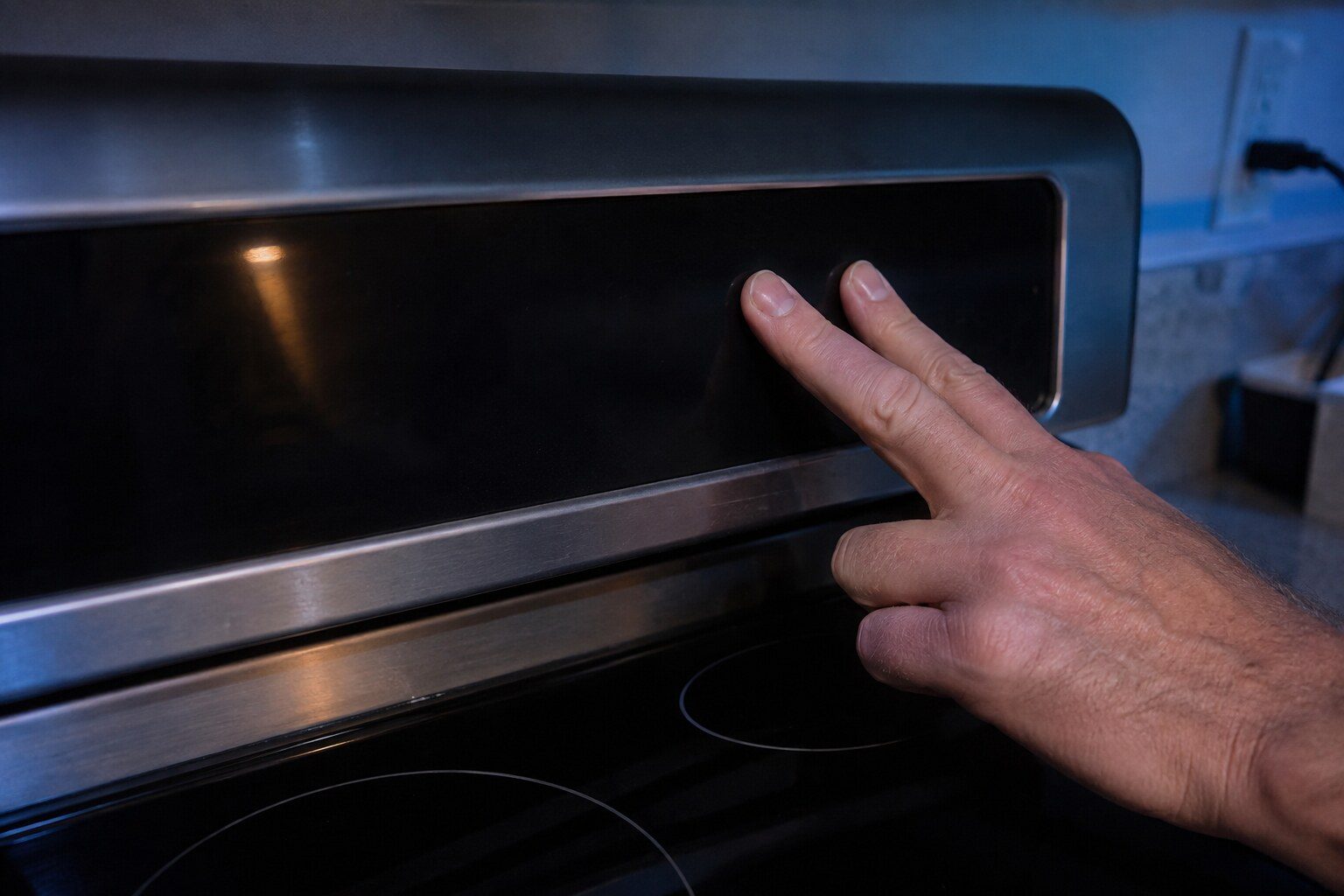
Samsung's oven and range panels are capacitive, and above a cooktop they take steam, grease and cleaning spray for years. Eventually one of two things happens: moisture gets behind the membrane, or a key distorts slightly in its opening.
The result is a key the control believes is being held down. Samsung reports that condition in its C-d family — door and key errors — and the behavior it produces depends on which key it is. A held bake key starts a bake. A held start key launches whatever was last selected. A held key of any kind can also lock out the rest of the panel, so the machine looks dead instead.
The test is the same one that works on a microwave: press each key in turn, working it to its edges, and watch what responds. One that does nothing, or one that responds without being touched, is your answer. Sometimes working it frees it.
Cause three: a relay that has stuck closed
This is the one that matters.
Inside the control board there are relays — electrically operated switches — that connect the elements to the supply when the control decides they should be on. They are the part that carries the current, and they wear. Most fail open, which gives you an oven that will not heat. Some fail closed, which gives you an element that has power regardless of what the control is asking for.
An oven with a welded bake relay will heat with nothing on the display and will keep heating after it is switched off at the panel. The only thing that stops it is removing power at the breaker.
If your oven has genuinely heated without being asked, and the panel checks out, assume this until it is disproved. It is not a common failure and it is not one to sit with.
What to do today
If the cavity has been hot without being asked: switch the oven off at the breaker and leave it off. Not at the panel — at the breaker. Then arrange for it to be looked at.
If only the display has come on: cancel every timer and delay setting, set the clock, and set the control lock. Then use it normally and see whether it recurs. If it does, press every key in turn and note which ones behave oddly.
Either way, write down what happened. Time of day, what was showing, whether the oven was warm, whether anybody had used the panel in the previous few hours. On a problem that comes and goes, that record is worth more than anything a technician can measure in an hour.
Why we take this one seriously
Most appliance complaints are about something not working. This is one of the few where the appliance is doing something it was not asked to do, and the thing it is doing involves heat in an enclosed cabinet in somebody's kitchen.
The likeliest outcome is still a setting or a key, and we say that on the phone. But the order of operations matters here more than almost anywhere else on this site: make it safe first, diagnose second. Nobody has ever regretted switching an oven off at the breaker for two days.
Questions people ask about this
How do I know whether it is really heating or just lighting up?
A display that comes on is a control problem. A cavity that gets hot is a heating problem, and those are different in seriousness. If you are not sure, put an oven thermometer in it and watch — but if there is any doubt at all, switch it off at the breaker while you find out.
Could the control lock stop it?
It stops accidental presses, which deals with the first two causes, and it is worth setting. It does not stop a relay that has stuck closed, because that is downstream of everything the panel does.
It happened once and has not happened again.
Most likely a setting. Check the delay start and the timer, and see whether anybody in the house was using the panel around then. If it happens a second time with nobody near it, treat it as the third cause until proved otherwise.
Is a stuck relay common?
It is the least common of the three and the most serious. Relays fail closed as well as open, and a bake relay that has welded is an element that has power whether or not anybody asked for it. That is the version where the breaker goes off and stays off until it is repaired.
Common Problems
More guides like this one
-
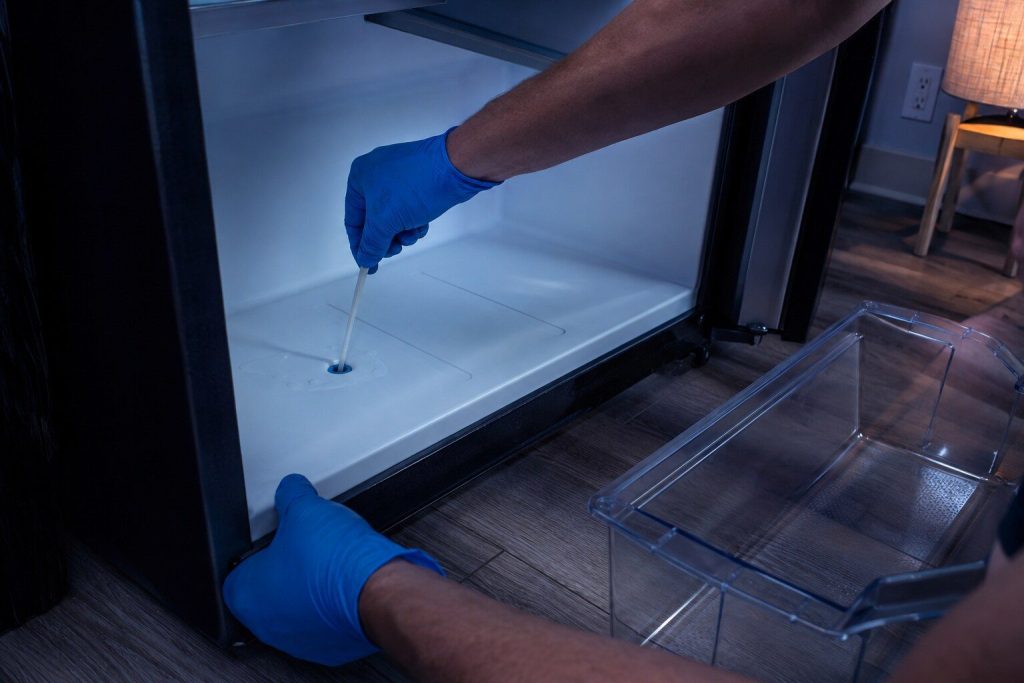
Water Under the Crisper Drawer, and the Small Blocked Tube Behind It
Water in that exact place is almost never the water line and almost never the filter. It is melt water that cannot get out, and the tube it should be leaving by has frozen shut.
Read more -
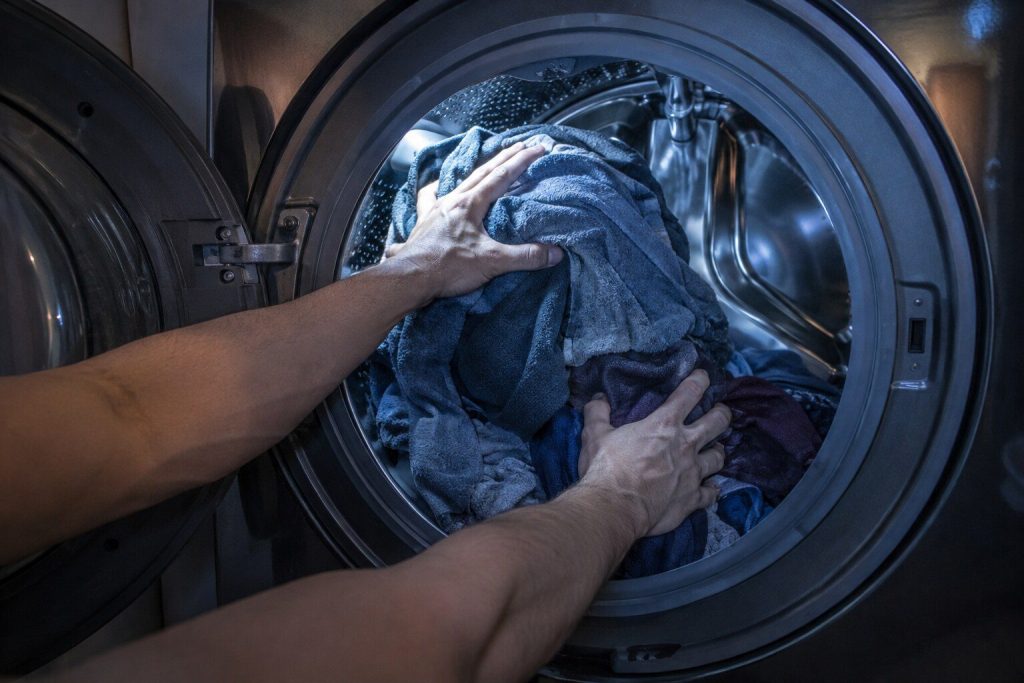
A Washer That Will Not Spin: Is It the Load or the Machine?
Ten minutes and three towels settle it. Samsung's Ub and Ur codes mean the machine has decided the load cannot be spun safely — and most of the time it is right about the laundry.
Read more -
A Noise That Stops When You Open the Door Is Almost Always One Thing
Opening the door cuts power to the evaporator fan. So a noise that stops the moment you open it is that fan — and on this make the usual reason is ice on the blade rather than a dead motor.
Read more
Tell us the model number and what it is doing.
This article is based on:
- Official manufacturer documentation
- Internal repair procedures
- Technician repair history
- Company quality standards