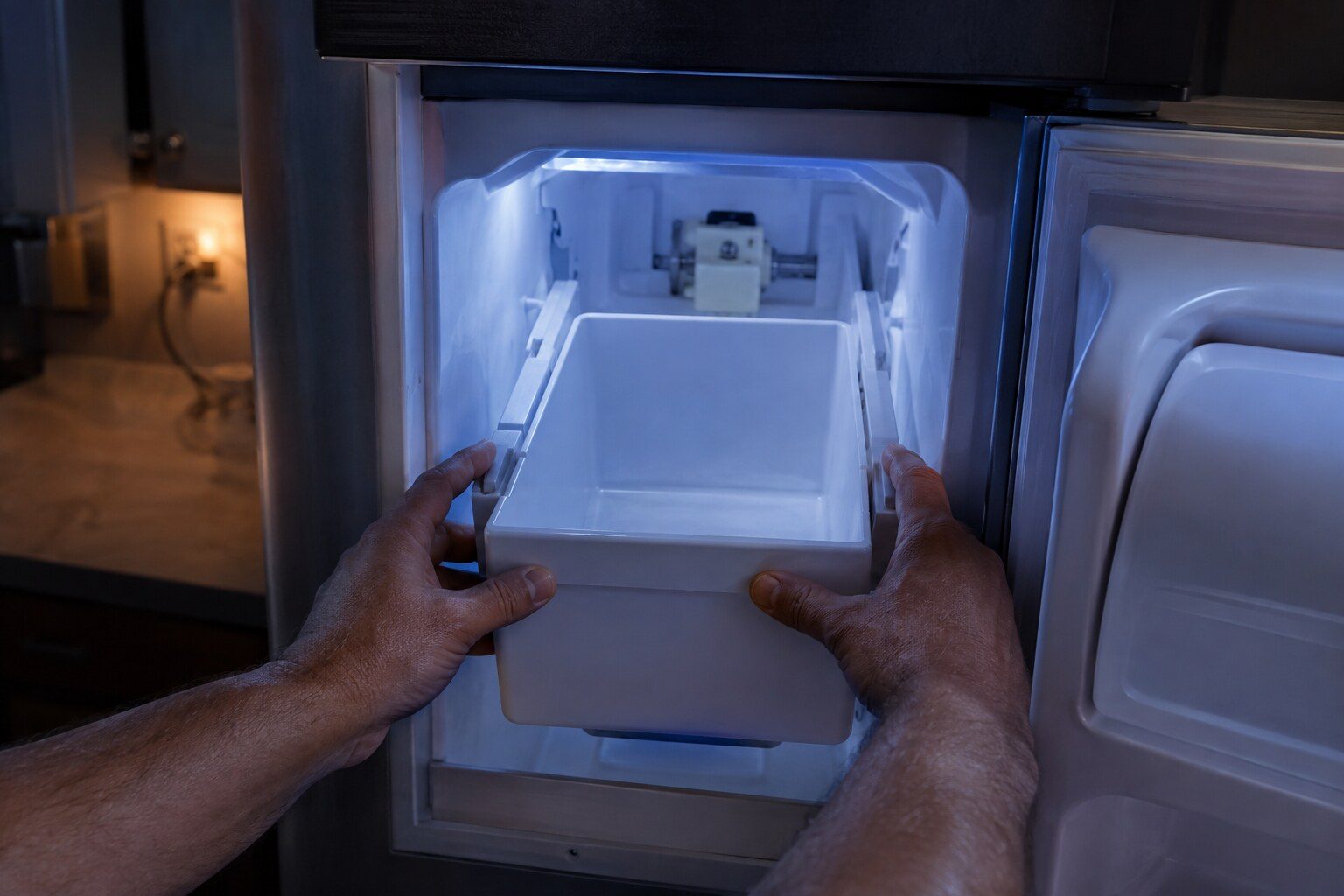
Maintenance & Prevention
No Ice After a Filter Change: The Seating, the Air and the Wait
Three things account for almost all of these. The cartridge is not fully seated, so the valve behind it is not opening properly — reseat it firmly to its click or quarter turn and check the head is dry. Air has been introduced into the line, which is normal after any filter change and which the ice maker will fill with instead of water — flush several liters through the dispenser to clear it. Or the machine simply has not had time: the compartment has to be at temperature and the first harvest cycles are slow, so twenty-four hours is the earliest point at which no ice means anything. Work through those three in order before assuming the ice maker has failed, because a filter change does not break an ice maker, and if the timing is a coincidence then the underlying cause was there before you touched anything.
The full guide
Samsung ice maker not making ice after water filter change: why the change is usually the cause
A water filter has one job and it does it passively. It does not have a motor, a sensor or a control, and swapping one does not break an ice maker.
What it does do is disturb the only part of the system an owner ever touches. And three things go wrong at that moment, all of them ordinary.
One: the cartridge is not quite home
Samsung filters lock in one of two ways depending on the cabinet — a quarter turn, or a firm push until it clicks. Both have a positive stop and both can be nearly reached.
A cartridge that is nearly home will usually pass water. It will not always open the path properly for the ice maker, which fills against a tighter timing window than a dispenser does. So the classic picture is exactly the one people describe: water works, ice does not.
Take it out and put it back deliberately. Feel for the stop rather than assuming it. Then run a hand round the filter head and the area under it and look for damp — a cartridge that is weeping slightly at the head is one that is not seated, and that water goes somewhere inside the cabinet where nobody looks for weeks.
This is also where aftermarket cartridges fail. Not the media — the collar. A housing that is a fraction off will either refuse to lock or lock without sealing, and both produce this page.
Two: air in the line
Every filter change introduces air. The cartridge comes out, the line opens, and the new one goes in with a volume of air inside it and around it.
The dispenser clears that quickly because you use it. The ice maker does not, because it fills once every few hours in short bursts. Until the air is gone, some of those fills are air rather than water, and an ice maker filling with air makes no ice while behaving perfectly normally.
The fix is a flush. Several liters through the dispenser, discarded, in stages rather than one long pour. You will usually see it working: cloudy or gray water first as the new carbon sheds fines, spitting and coughing as air comes through, then clear steady flow.
Do that properly and a large share of these calls end there.
Three: not enough time
This is the one that wastes the most money, because it costs nothing to avoid.
The compartment has been open. Warm room air has been in there. On some cabinets the water supply has been off for a few minutes. The ice maker will not start a proper harvest cycle until conditions are right, and the first cycles after any interruption are slow by design.
Twenty-four hours. Not two, not overnight if overnight is six hours. A full day, and then look in the bucket.
If there is ice, you are done. If there is a little, it is working and catching up. If there is none at all after a day, with the cartridge seated and the line flushed, then you know something and the rest of the diagnosis begins.
Two free things worth checking anyway
While you are there, rule out the two causes that have nothing to do with the filter and stop production completely.
The bucket. Take it right out and push it back until it seats. If the cabinet cannot see the bucket, it stops making ice and shows a blinking Ice Off indicator. It is very common, and it happens the day somebody empties the bucket — which is often the same day they change the filter.
The switch. The ice maker is turned on and off in the panel settings on most current cabinets, and it is easy to hit while doing anything else on that display.
Both take ten seconds and both are free.
If none of that works
Then treat it as an ordinary no-ice call, and the filter change becomes one detail rather than the answer.
The order from there is: is the compartment cold enough — a thermometer, around 0°F, an hour to settle. Is the fill tube clear, or is there a visible plug of ice at the end of it, which points at the small heater Samsung publishes 33E for. And then the module itself.
There is a useful cross-check available at this point. If the water is also slow at the dispenser, the problem is upstream and the filter or the supply is still the best suspect. If the water is at full pressure and only the ice is missing, the problem is downstream of the split and the filter has been cleared.
The wider point about filters here
South Florida water is harder and carries more sediment than the average the six-month interval was set against, and an ice maker running through the same cartridge adds volume nobody counts.
Four to six months is realistic. Changing on schedule rather than on symptom matters because everything downstream — the valve, the fill tube, the ice maker itself — works harder against a restriction, and every one of those is more expensive than a cartridge.
Which makes it slightly ironic that the change is what people call us about. Done deliberately, with a flush and a day's patience, it is the cheapest maintenance on the appliance.
Questions people ask about this
Water comes out of the dispenser fine, so the filter must be seated.
Not necessarily. A cartridge that is nearly home will often pass enough water for the dispenser and not enough for the ice maker, because the ice maker fills against a tighter timing window. Water at the dispenser is good news and it is not proof.
How much should I flush through?
Several liters, discarded, in stages rather than one long pour. New carbon media sheds fines and holds air, and both produce exactly the symptoms people call about — gray or cloudy water, spitting at the dispenser, and an ice maker filling with air.
It worked before and now it does not. That has to be the filter.
Usually, and that is why the three checks above come first. But not always — occasionally a change is simply when somebody started paying attention. If reseating, flushing and waiting all fail, treat it as an ordinary no-ice call, and the fact that it started after a change becomes one detail among several.
Should I put the old filter back to test?
It is a legitimate test and it does tell you something, though a used cartridge that has been out and dried is not quite the same as it was. A cleaner test on most cabinets is the bypass plug, if you have one — no filtration, no restriction, and a clear answer.
Maintenance & Prevention
More guides like this one
-
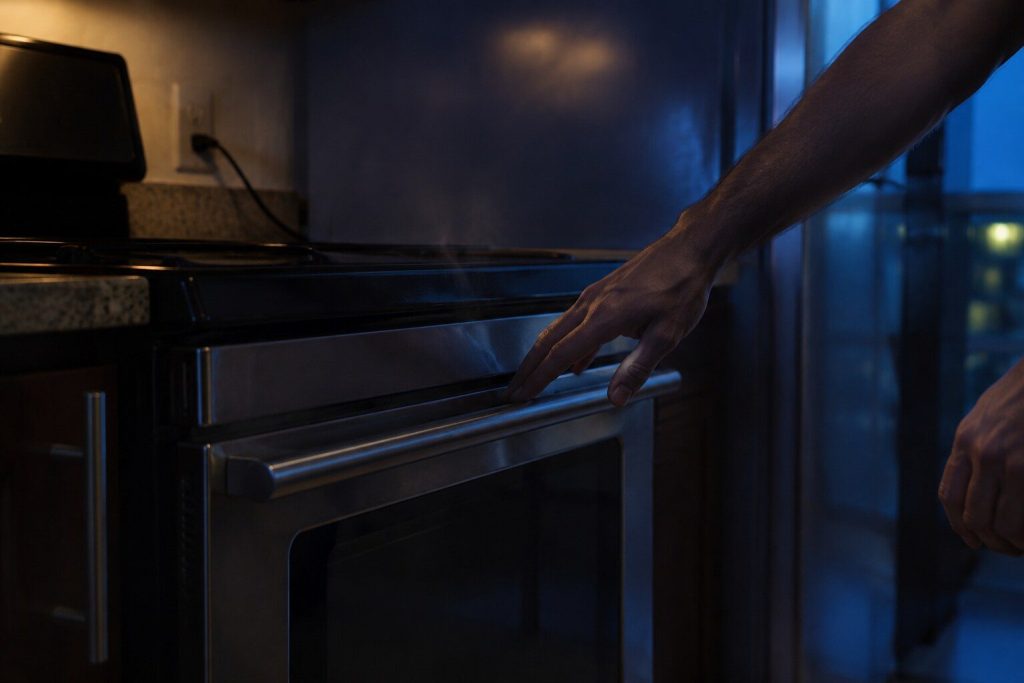
The Oven Door Is Still Locked After Self Clean. What Now?
The lock releases on temperature, not on time. Which means the answer is usually to wait — and the mistakes people make trying to force it are what turn a wait into a repair.
Read more -
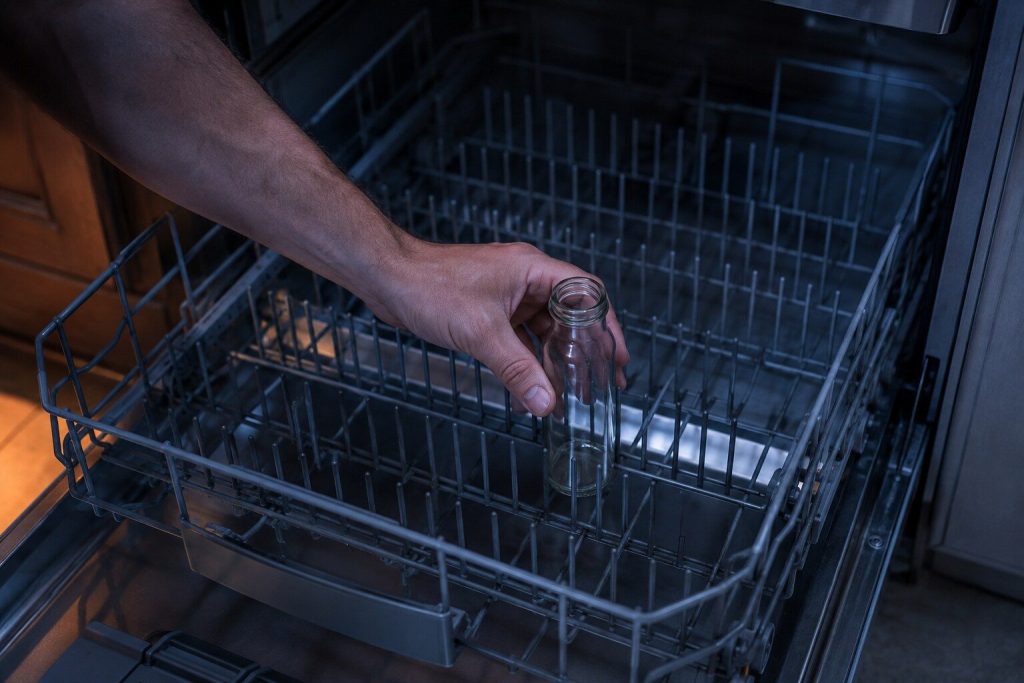
Do You Add Detergent to a Self Clean Cycle? Dishwasher and Washer
Four nearly identical questions in the search data, and the answers are not the same for the two machines. Detergent in the wrong cycle is one of the causes of the smell people run it to remove.
Read more -
How Often a Samsung Washer Actually Needs Its Drum Cleaned in Florida
The interval in the manual was not written for a laundry room at eighty percent humidity. Here the answer is more often, and three habits matter more than the cycle does.
Read more
Tell us the model number and what it is doing.
This article is based on:
- Official manufacturer documentation
- Internal repair procedures
- Technician repair history
- Company quality standards