Common Problems
A Dryer That Stops After a Few Minutes Is Telling You About Air
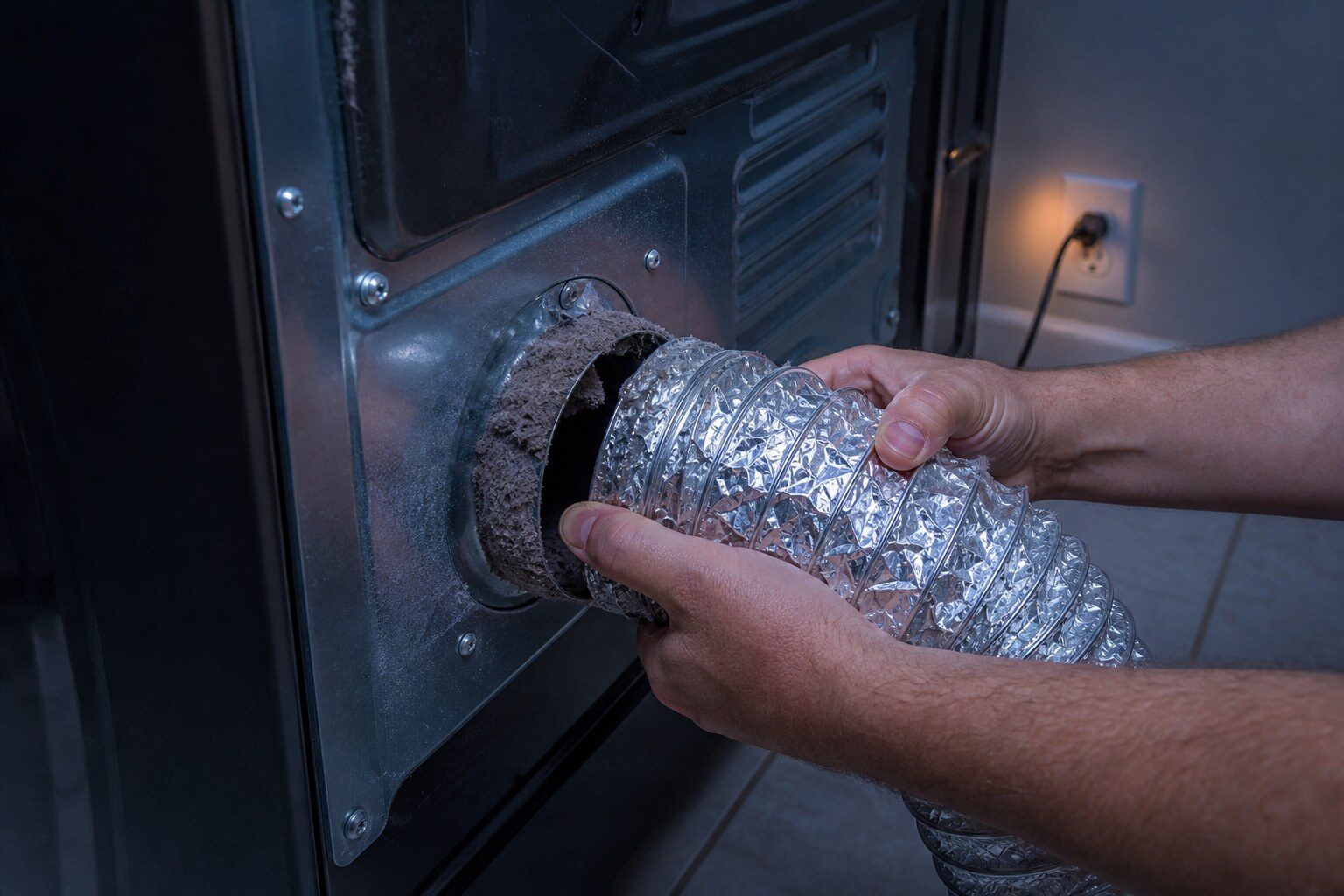
A dryer that starts, runs for a few minutes and stops is almost always overheating, and it is stopping on purpose. A vented dryer removes water by carrying it away in moving air; if that air cannot get out, the temperature inside climbs, and a thermostat or a thermal cut-out shuts the heat or the whole machine down. The cause is usually outside the appliance: a lint screen with fabric softener film on it, a duct packed along its run, a crushed section behind the machine, or an outside flap that no longer opens. On a ventless heat-pump dryer the equivalent is a condenser and its filter. This is also the version of a dryer problem that starts fires, which is why it is worth acting on rather than living with. Clean the lint screen properly, have the duct cleared along its whole length, and check the outside flap while the machine is running before anybody replaces a part.
The full guide
Why does my Samsung dryer keep shutting off after a few minutes? The machine is not failing. It is protecting itself.
A dryer does not dry with heat. It dries with moving air that happens to be hot: the air picks up water from the clothes and carries it out of the house. Heat makes the air able to hold more water; the air is what actually removes it.
So when the air cannot leave, everything goes wrong at once. The moisture stays in the drum. The temperature inside climbs, because the heat has nowhere to go either. And at some point a thermostat opens, or a thermal cut-out blows, and the machine stops.
That is why "it runs for a few minutes and stops" is such a specific complaint. A few minutes is roughly how long it takes a restricted dryer to reach its temperature limit.
Four places the air gets stuck
The lint screen. The obvious one, and the one people are most confident about — which is the problem. Fabric softener and dryer sheets leave a waxy film on the mesh that you cannot see and cannot feel. A screen can look perfectly clean and pass almost no air. The test is water: hold the screen under a running tap. Water should go straight through it as if it were not there. If it pools or beads on the surface, the screen is blocked. Warm water and a soft brush deal with it, and it is worth doing every few months rather than never.
Behind the machine. Almost every dryer is pushed back against a wall, and the flexible duct behind it gets crushed, kinked or folded in the process. A foil concertina duct squashed flat behind a machine is the most common installation problem in a laundry room and it is completely invisible until the dryer is pulled out.
The run itself. In a house the duct might go three feet through a wall. In a condo it might go twenty feet through a ceiling with three bends in it. Lint packs at the bends first, then along the whole length, and a duct that is clear at both ends and packed in the middle is common — which is why clearing "the vent" by pulling lint out of the first foot achieves very little.
The outside flap. A hood that has been painted shut during a repaint, blocked by a bird or a wasp nest, or fitted with a screen that has clogged. This one is worth checking yourself: with the dryer running, go outside and look. The flap should be open and you should feel real air.
Why the machine stopping is the good outcome
There are three levels of protection in a vented dryer and they escalate.
A cycling thermostat opens and closes to keep the temperature in range. That is normal operation. When airflow drops, it spends more and more time open, which is why a restricted dryer takes longer before it stops entirely.
A high-limit thermostat opens if the temperature exceeds a safe ceiling. That is the one that usually produces this complaint — the machine keeps tumbling, or stops, and there is no heat.
A thermal fuse or cut-out is one-shot. It blows and stays blown, and the machine will not run at all until it is replaced.
Every one of those exists because of what happens if none of them acts. Restricted airflow and a heat source in a box full of lint is the mechanism behind most dryer fires. A machine that shuts itself off is doing exactly what it was designed to do, and it is telling you something that deserves an afternoon.
The part people replace, and why it comes back
The thermal cut-out is cheap and easy to reach on most machines, and replacing it makes the dryer work again — for a week or two.
It has to be said plainly: a blown cut-out is not a failure, it is a message. It blew because the machine got too hot, and it got too hot because air could not move. Fit a new one into the same restricted duct and it will blow again, and the second time it will have taken the heating element with it more often than not.
Every heating repair we do on a vented dryer includes proving the airflow, and we would rather clear a duct and not sell you a part than the other way round.
The ventless case
Heat-pump dryers are becoming common here, particularly in condos where a duct to the outside was never possible. They work differently: the air is recirculated rather than exhausted, the moisture is condensed out of it, and the water is drained or collected in a tank.
There is no duct, so none of the above applies literally. But the principle does. Air still has to move, and it moves through a condenser with a filter in front of it. That filter needs cleaning far more often than owners are told — in a household doing several loads a week, monthly is not unreasonable — and a clogged condenser produces exactly the same picture: long cycles, high internal temperature, and a machine that stops.
If your dryer is ventless and it is stopping, find the condenser filter before anything else. It is behind a panel at the bottom front on most machines, and a great many of them have never been opened.
What Samsung publishes about it
Samsung groups the relevant codes as temperature errors — tC and its relatives — and its own first instruction for the whole group is to clean the lint screen and the exhaust vent. Not a part. Not a reset. The airflow.
On machines with no digital display the same conditions come out as blinking lights, and Samsung's answer for several of those combinations is the same single instruction.
That is worth noting because it is unusual: a manufacturer whose published first step for a family of codes is maintenance the owner can do. When a maker says that about its own appliance, it is generally because that is what its service data says the answer usually is.
When to call
When the screen passes water freely, the duct has been cleared along its whole run, the outside flap opens with real air behind it, and the machine still stops after a few minutes.
At that point it is internal — a thermostat that is opening early, a sensor that is reading wrong, or a heating circuit that is not switching properly — and it is measured rather than guessed at. Bring us the fact that the airflow has already been proved; it is the most useful thing anybody can hand a technician on this particular complaint, and it means the visit starts where it should rather than at the lint screen.
Questions people ask about this
The lint screen looks clean.
Fabric softener and dryer sheets leave a film on the mesh that is invisible and nearly airtight. Run water at the screen: if it pools instead of passing straight through, the screen is blocked however clean it looks. Warm water and a soft brush fixes it.
Is it dangerous?
Restricted airflow is the mechanism behind most dryer fires, so yes, this is one to deal with rather than work around. The machine stopping is the protection working; what you do not want is the version where it keeps running.
It only does it on the big loads.
That fits airflow precisely. A larger load holds more water, so the machine works harder and for longer, and a marginal duct that copes with a small load will not cope with a full one. It is a strong hint that nothing inside the appliance has failed yet.
My dryer is ventless. Does any of this apply?
The principle does, the parts do not. A heat-pump dryer has no duct, so the equivalent restriction is the condenser and the filter in front of it. Both need cleaning far more often than most owners are told, and a clogged condenser turns a slow machine into a useless one.
Common Problems
More guides like this one
-
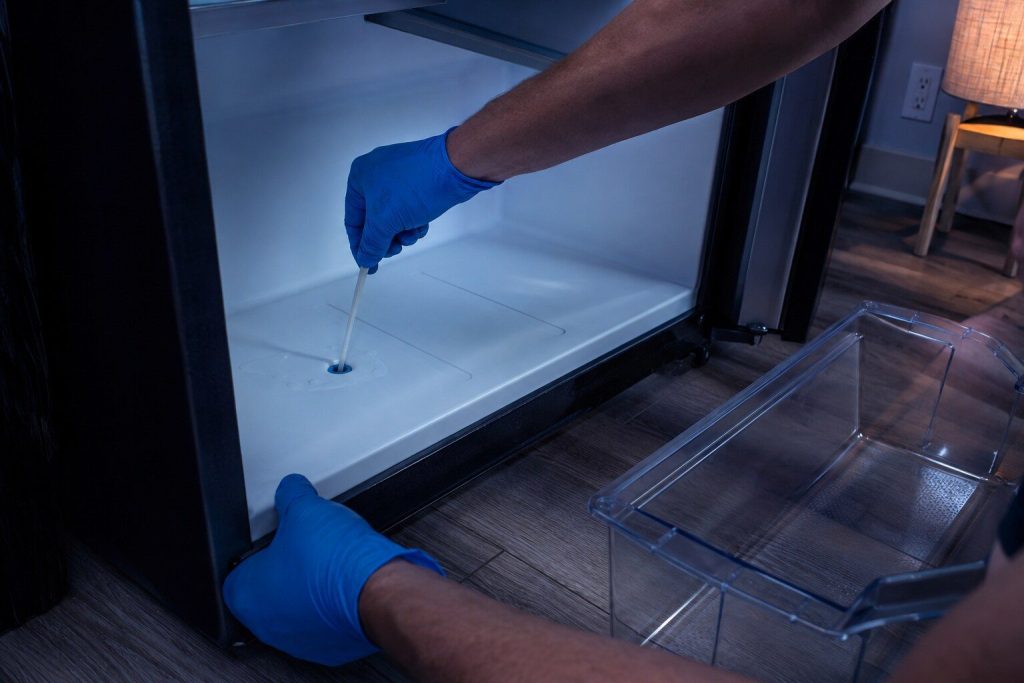
Water Under the Crisper Drawer, and the Small Blocked Tube Behind It
Water in that exact place is almost never the water line and almost never the filter. It is melt water that cannot get out, and the tube it should be leaving by has frozen shut.
Read more -
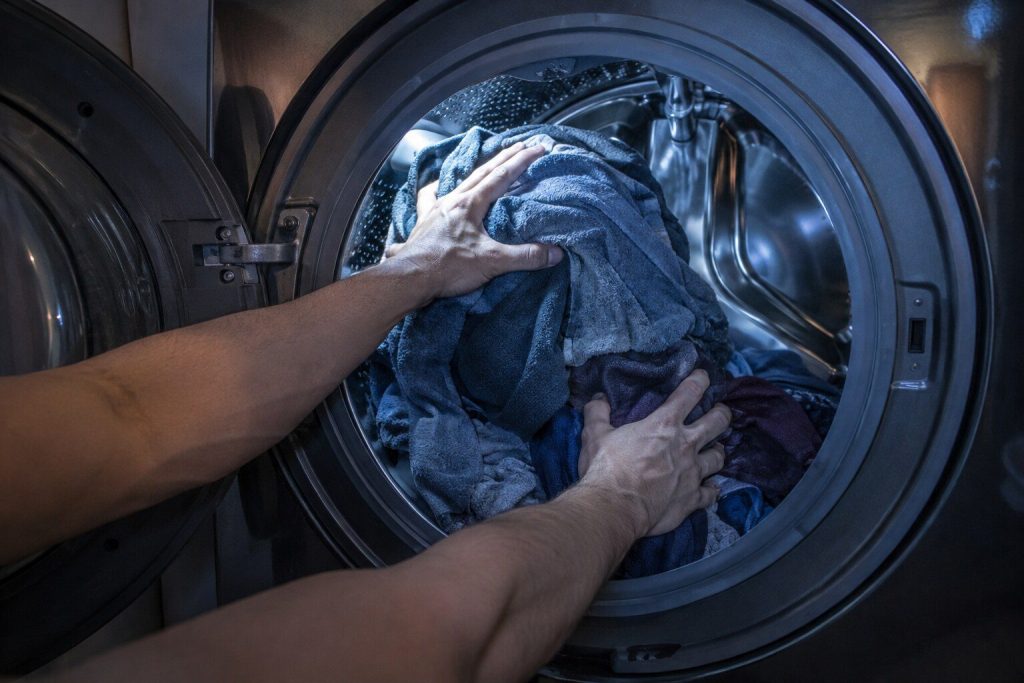
A Washer That Will Not Spin: Is It the Load or the Machine?
Ten minutes and three towels settle it. Samsung's Ub and Ur codes mean the machine has decided the load cannot be spun safely — and most of the time it is right about the laundry.
Read more -
An Oven That Turns Itself On, and the Three Explanations
Three causes, and two of them are free to rule out. The third is worth acting on the same day, because an oven that heats without being asked is not a thing to live with.
Read more
Tell us the model number and what it is doing.
This article is based on:
- Official manufacturer documentation
- Internal repair procedures
- Technician repair history
- Company quality standards