Common Problems
Why the Dryer Says an Hour and Then Suddenly Says One Minute
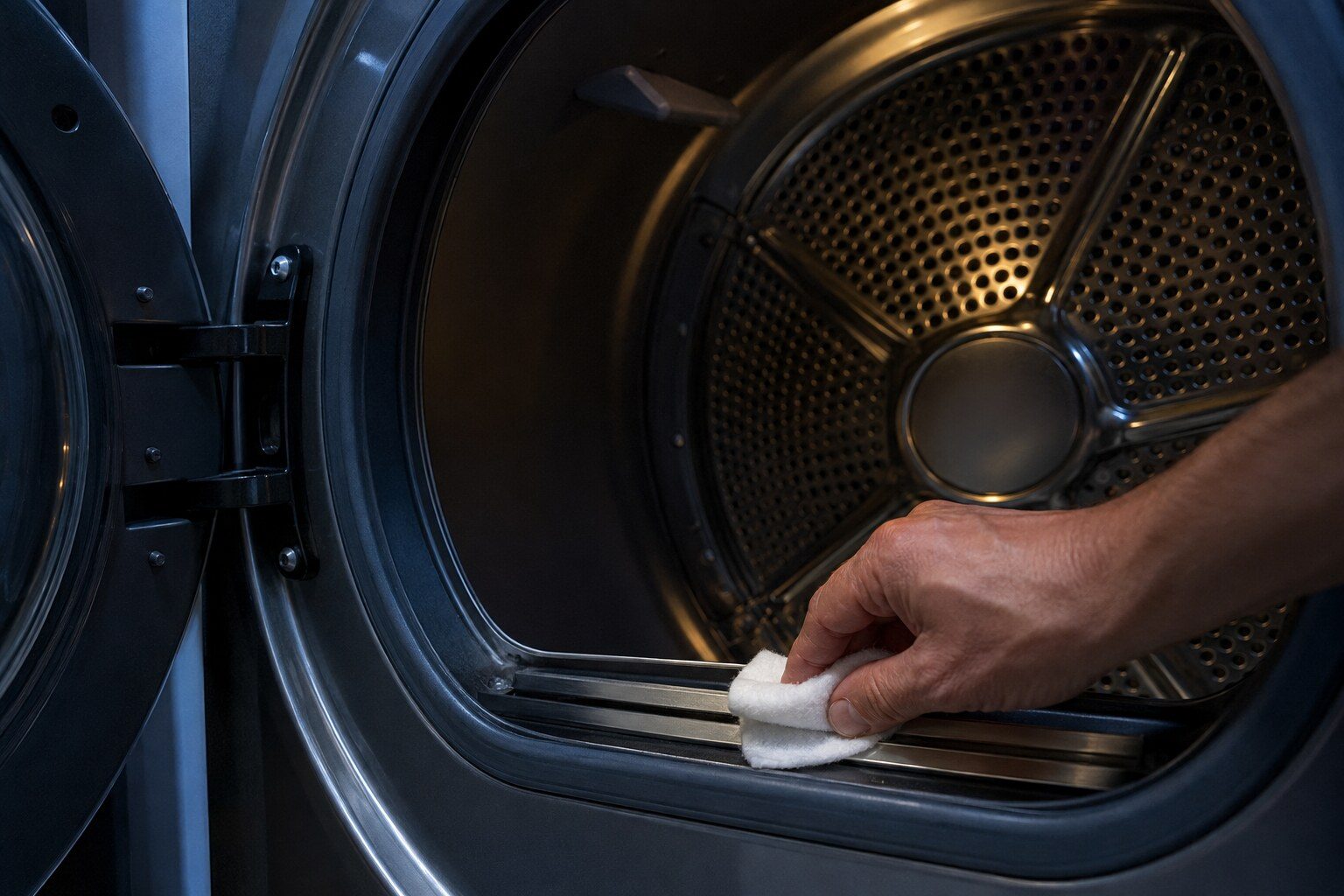
On a sensor-dry cycle the time on the display is an estimate, not a countdown. The machine does not know how long the load will take; it guesses from the program and the initial conditions, then keeps measuring how wet the clothes are through two metal strips inside the drum. When the load reaches the dryness the cycle was set for, the estimate collapses to the cool-down time — which can be one minute — and the number appears to jump. That is normal behavior and every sensor dryer does it. It becomes a symptom when it happens within a few minutes of starting, with clothes that are still wet, because that means the sensor believes the load is dry when it is not. The usual cause is fabric softener film insulating the sensor bars, and cleaning them with rubbing alcohol is often the whole repair.
The full guide
Why does my Samsung dryer go from 1 hour to 1 minute? The number was never a clock
Two phrases in this brand's search data describe the same moment: a dryer that says an hour and then, without warning, says one minute. People read it as a malfunction because a countdown that skips fifty-nine minutes is not what a countdown does.
But on a sensor-dry cycle it is not a countdown. It is a running estimate.
Here is what the machine actually knows when you press start: which program you chose, roughly how much is in the drum from the weight, and how wet things are at this instant. From that it produces a number, because an appliance that showed nothing at all would be worse. Then it keeps measuring, and the number gets revised as the measurements come in.
When the load reaches the dryness the program was set for, there is nothing left to estimate. What remains is the cool-down — a few minutes of tumbling without heat so nothing comes out hot enough to crease — and the display shows that instead. Fifty-nine minutes vanish because they were never real.
How the sensing works
Inside the drum there are two thin metal strips, usually near the lint screen opening or on the front bulkhead, an inch or two apart. They are not a temperature sensor and not a humidity sensor. They are simply two electrical contacts.
When a wet garment tumbles past and touches both strips at once, it completes a circuit, because water conducts and dry fabric does not. The machine counts how often that happens. Early in a cycle it happens constantly. As the load dries, the contacts get fewer and further apart, and when they fall below a threshold the machine decides the load has reached the dryness level you asked for.
It is a clever piece of engineering precisely because it is so simple: no calibration, no consumables, nothing to drift. Which is why the one thing that breaks it is worth knowing.
The film nobody can see
Liquid fabric softener and dryer sheets both leave a residue behind. On the lint screen it shows as the waxy film that makes a clean-looking screen pass no air. On the sensor bars it does something worse: it insulates them.
A thin coating of softener residue on those two strips means wet fabric no longer completes the circuit reliably. The machine stops seeing contact, concludes the load is dry, and collapses the estimate — sometimes within five minutes of starting, on clothes that are still soaking.
That is the version of this behavior that is a real symptom, and the tell is timing. A jump near the end of a cycle, with clothes that are dry, is the machine working correctly. A jump near the beginning, with clothes that are wet, is the sensor being wrong.
The fix is usually free. Rubbing alcohol on a cloth, wiped along both strips until they are bright metal again. It takes a minute. If the next load behaves normally, the repair was cleaning and everything else you were about to do would have been unnecessary.
The other cause, which is airflow
There is a second way to get short cycles and wet clothes, and it is the one covered on our page about a dryer that stops after a few minutes: restricted airflow.
The two look different if you watch for it. A sensor problem gives you a cycle that ends early and calmly, with the machine convinced it has finished. An airflow problem gives you a cycle that runs hot, takes far longer than it should, or shuts down partway through with a machine that is noticeably hot to touch.
If you have both — long cycles and clothes that are still damp — start with the duct. If you have short cycles and wet clothes, start with the sensor bars.
What Samsung publishes
There is a condition on the dryer table for this — oD, a dry time error — and it is exactly what it sounds like: the machine has run past the time it is willing to spend on a load without reaching the dryness it was asked for. Samsung lists it among the conditions it publishes no specific procedure for, which is honest, and our own reading of it is that the sensor and the airflow are the two places to look before anything else.
The habit question
We are not going to tell anybody to stop using fabric softener. What is worth saying is that the amount matters more than most people think, and that the residue goes somewhere.
Halving the dose, and wiping the sensor bars every few months, is enough to keep this from ever becoming a service call. Dryer sheets do the same thing to the lint screen, so if you use those, wash the screen with warm water and a soft brush occasionally rather than just pulling the lint off it.
Both of those are five-minute habits that prevent an appliance behaving as though something has broken.
When it is worth a visit
When the bars are clean, the airflow is proved, and the machine still ends its cycles early on wet clothes.
At that point the sensing circuit rather than the sensor is the question — the wiring to the bars, or the control that reads them — and that is measured. It is not a common repair, and the reason it is not is that most of these calls end at two metal strips and a cloth.

Questions people ask about this
So the display is lying to me?
It is estimating, and it says so in the manual. A sensor cycle stops when the clothes are dry rather than when a clock runs out, so any time shown before that point is a prediction based on what the machine knows so far. Predictions get revised.
It jumps to one minute after five minutes and the clothes are soaking.
That is the symptom rather than the behavior. The sensor is telling the machine the load is dry when it is not, and the usual reason is a film on the sensor bars. Clean them and try one more load before assuming anything has failed.
Where are the sensor bars?
Two thin metal strips inside the drum, usually near the lint screen opening or on the front bulkhead, a few inches apart. Wet fabric touching both of them completes a circuit; the drier the load, the less often that happens.
Should I just use a timed cycle instead?
As a workaround it works, and a lot of households end up there. It costs you the thing sensor drying is for, which is stopping when the clothes are dry rather than cooking them for a fixed period — so it is worth cleaning the bars first.
Common Problems
More guides like this one
-
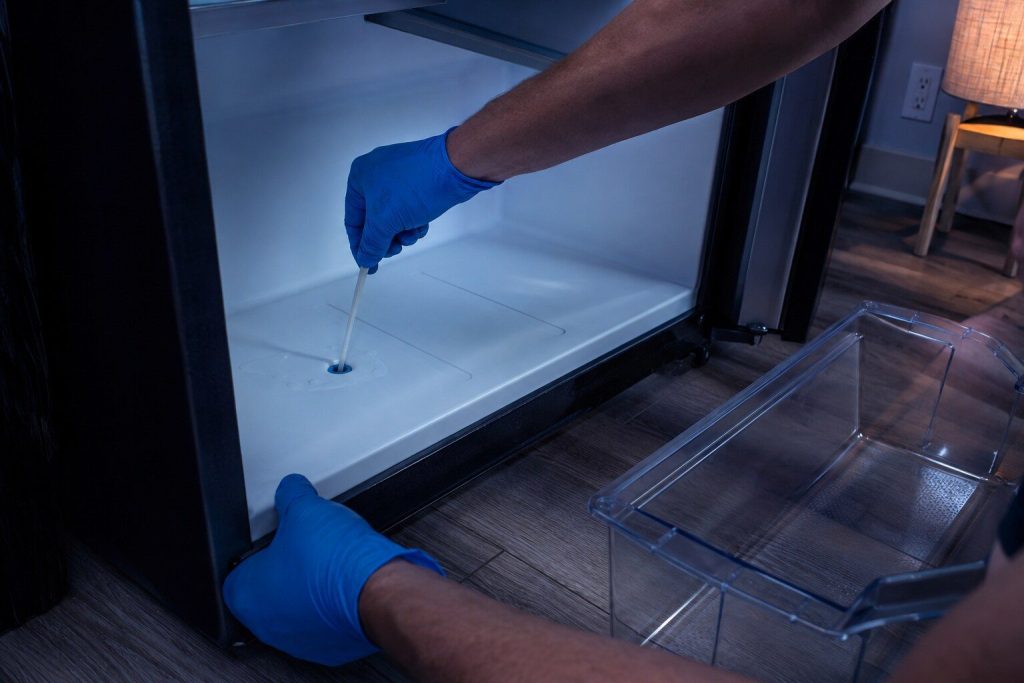
Water Under the Crisper Drawer, and the Small Blocked Tube Behind It
Water in that exact place is almost never the water line and almost never the filter. It is melt water that cannot get out, and the tube it should be leaving by has frozen shut.
Read more -
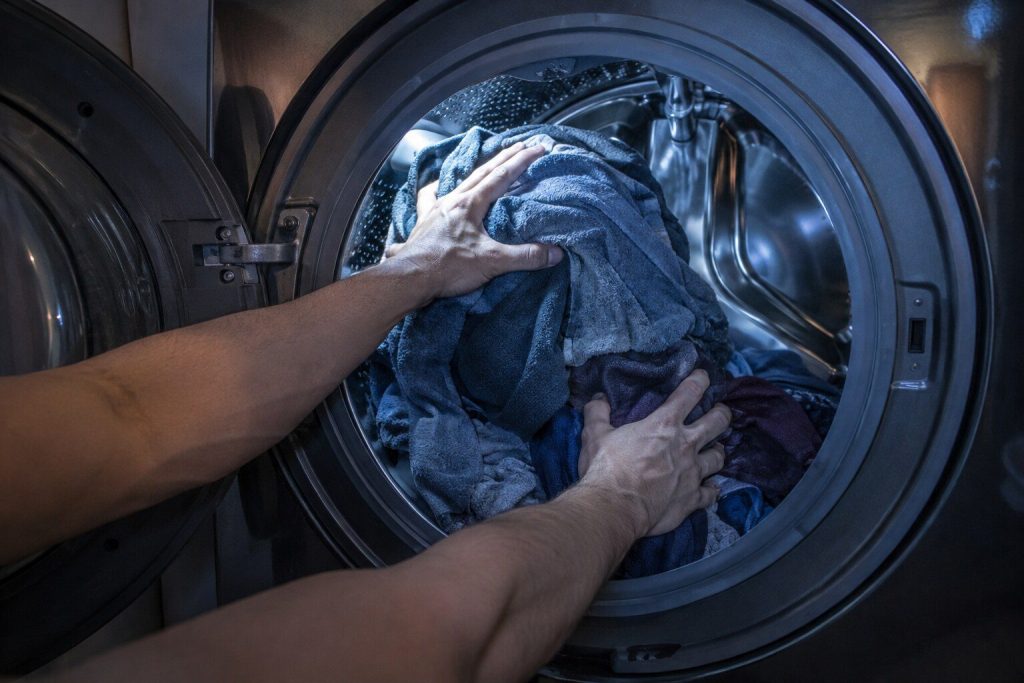
A Washer That Will Not Spin: Is It the Load or the Machine?
Ten minutes and three towels settle it. Samsung's Ub and Ur codes mean the machine has decided the load cannot be spun safely — and most of the time it is right about the laundry.
Read more -
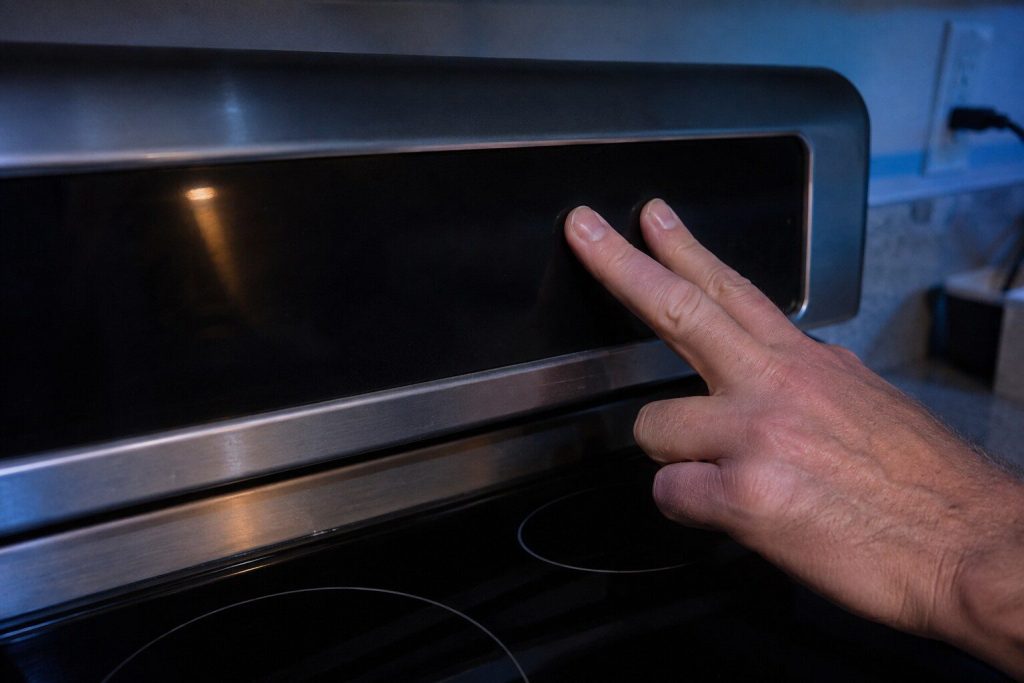
An Oven That Turns Itself On, and the Three Explanations
Three causes, and two of them are free to rule out. The third is worth acting on the same day, because an oven that heats without being asked is not a thing to live with.
Read more
Tell us the model number and what it is doing.
This article is based on:
- Official manufacturer documentation
- Internal repair procedures
- Technician repair history
- Company quality standards