Safety & Risks
Mold on a Door Seal: Removing It, and Stopping It Coming Back
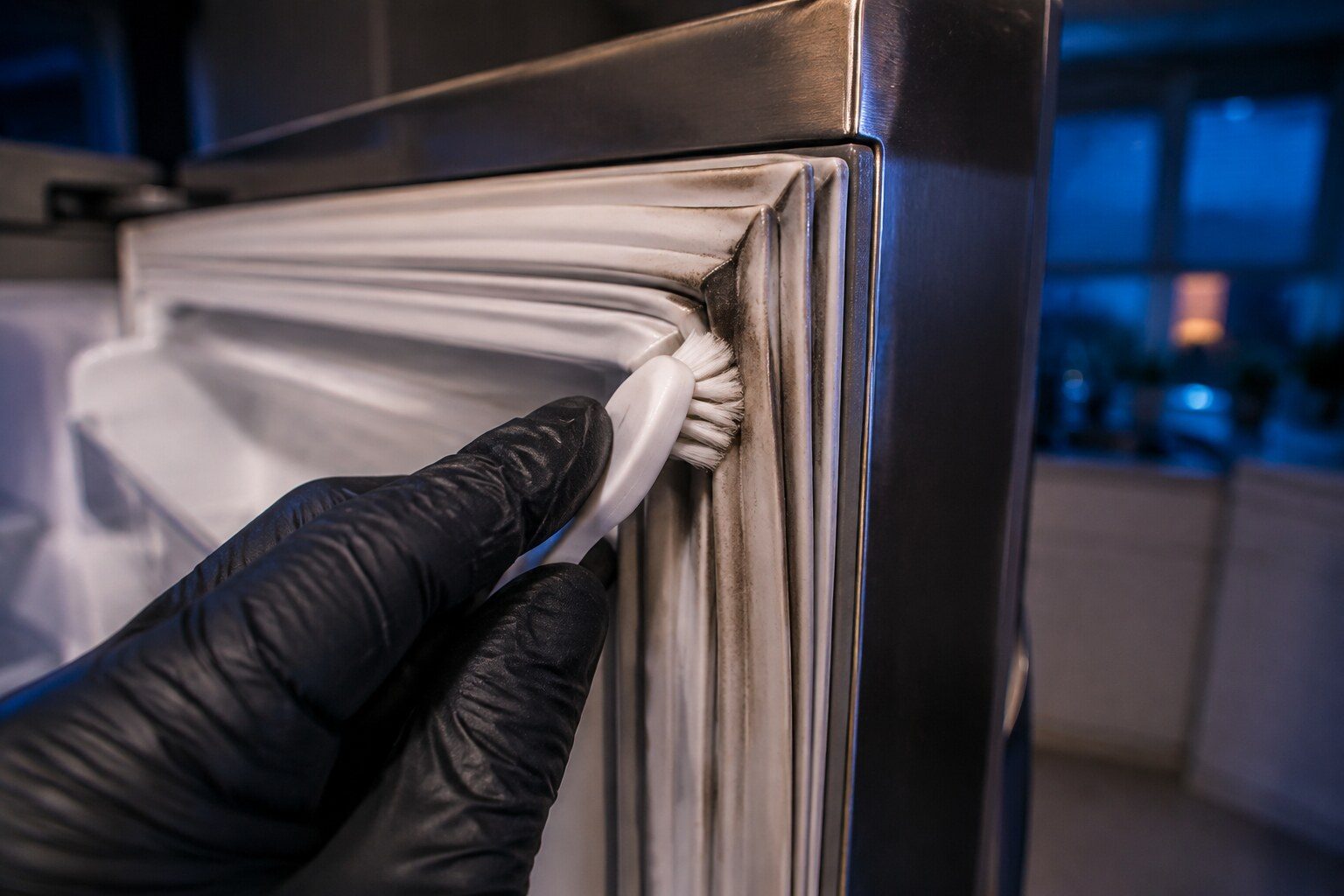
Warm water and dish soap on a soft cloth, working into the folds of the gasket with a soft brush or a cotton bud, then dried thoroughly. That removes it. For anything stubborn, a paste of bicarbonate of soda left for a few minutes lifts more without attacking the rubber. Do not use bleach on a refrigerator gasket as a routine — it degrades rubber over time and it is not necessary at this scale — and never combine bleach with vinegar in any appliance. The more important half is where it returns. Mold grows where there is moisture, and moisture sits where the seal is no longer making contact, so a patch that keeps coming back in the same place is telling you that the gasket has lost its grip there or the door has dropped. Test it with a piece of paper closed in the door: it should drag on the way out, all the way round. Where it slides out easily is where the warm wet air is getting in.
The full guide
How to remove mold from rubber seal on refrigerator: getting it off is the easy part
Warm water, a little dish soap, a soft cloth, and a soft brush or a cotton bud for the folds. Work along the whole gasket, not just the part you can see from standing height, and pay attention to the underside of the seal along the bottom of the door where water collects.
For anything that will not lift, a paste of bicarbonate of soda and water, left a few minutes, then worked gently and rinsed. It is mildly abrasive and mildly alkaline, which is enough for this and gentle enough for rubber.
Then dry it thoroughly. This is the step people skip and it is the one that decides whether you are doing this again in three weeks.
What not to use
Bleach, as a routine. It works, and it is not necessary at this scale, and repeated exposure degrades rubber — which is the opposite of what you want for a component whose whole job is to stay flexible. Occasional use on a bad case is not a catastrophe; a weekly habit is a gasket replaced sooner.
Bleach and vinegar together. Not in any order, not with a gap in between, not in a refrigerator, a dishwasher or a washing machine. Chlorine bleach and acid produce chlorine gas. This is the one absolute on the page.
Anything abrasive. A scouring pad on a gasket tears the surface, and a torn surface holds more moisture and more growth than an intact one.
The half that actually matters
Mold needs moisture. Moisture sits where air can reach a cold surface, and on a refrigerator door that means wherever the seal is no longer making proper contact.
So the location is a diagnosis. A patch that keeps coming back in the same place along the hinge side, or along the top corner, or at the bottom of the door, is telling you that the gasket has lost its grip there — and cleaning it repeatedly is treating the symptom while the cause carries on.
The test costs nothing. Close the door on a piece of paper or a dollar bill so that half of it is inside, and pull. It should drag noticeably on the way out. Do it at intervals of a few inches, all the way round both doors. Anywhere it slides out with no resistance is a gap, and that gap is where your kitchen's August air is walking in all day.
What a bad seal costs beyond the mold
This is why we treat it as more than a cleaning job.
Warm wet air entering a cold cabinet continuously does three things. It raises the humidity inside, which is what feeds the mold. It condenses and freezes on the evaporator, which builds frost faster than the defrost cycle was designed to clear — so the frost accumulates, airflow drops, and the compartment gets gradually warmer. And it makes the compressor run longer every day to hold the same temperature, which costs electricity and shortens its life.
A great many "my refrigerator is not cooling properly" calls in this city have a gasket at the bottom of them. The mold is simply the most visible symptom and usually the first one anybody notices.
When cleaning is not enough
The gasket has gone stiff. Age and heat harden the rubber and it no longer conforms to the cabinet. Sometimes a proper clean and a light wipe of petroleum jelly on the sealing face restores enough flexibility to seal again — worth trying before replacing.
It is torn, or permanently deformed. A gasket with a split, or with a section that has taken a set from being folded against something, does not recover. That is a replacement, and it is the cheapest part on the appliance.
Mold is growing in the rubber rather than on it. If it has penetrated the material — black staining that does not lift at all with bicarbonate — cleaning will not get it back, and the surface is now permanently rougher than it was.
The door has dropped. This is the one people miss. A heavy door on a large cabinet settles on its hinge over ten years. It does not look wrong. It simply stops meeting the cabinet along the top edge, and a new gasket fitted to a door that is out of alignment will fail exactly the same way. Alignment is part of a proper gasket job.
The other appliances with the same problem
Because the mechanism is not about refrigerators.
A front-load washer's door boot is the worst case in the house. It has a fold that holds water after every single wash, in a dark, warm, sealed drum, in a laundry room at eighty percent humidity. If you have found mold on a refrigerator seal, go and look at the boot.
A dishwasher door seal, particularly along the base of the door where water sits after the cycle.
The prevention is the same in all three cases and it is free: let air get to them. Leave the washer door and dispenser drawer ajar between loads. Let the dishwasher stand open for a while after a cycle — most now do it themselves with an auto-release. And on a refrigerator, dry the gasket when you clean it and check it a couple of times a year rather than never.
Why South Florida makes this worse
Nothing here dries on its own.
Eight months of the year the air is carrying enough water that a damp rubber fold in a closed cabinet stays damp indefinitely. Households that moved here from a dry climate find this genuinely surprising: the same appliance, treated the same way, behaves differently.
It is not a defect and it is not specific to Samsung. It is a maintenance item that this climate promotes from occasional to regular, and ten minutes twice a year is the whole of it.
Questions people ask about this
Is mold on a door seal dangerous?
At the scale most people find it — a dark line in a fold — it is a hygiene and smell problem rather than a health emergency for most households. It is worth taking more seriously if anyone in the house has asthma or is immunocompromised, and it is worth dealing with regardless because of what it is telling you about the seal.
Why does it always come back in the same spot?
Because that is where the moisture is, and the moisture is there because the seal is not making contact there. Mold is the symptom; the gap is the cause. That is why cleaning it repeatedly without fixing the gasket is a losing arrangement.
Can a gasket be cleaned back to life?
Often, yes. A gasket that has gone stiff and dirty in its folds can seal much better after a proper clean, and some respond well to a light wipe of petroleum jelly on the sealing face to restore flexibility. One that is torn, permanently deformed or has mold growing in the rubber rather than on it is replaced.
Does it happen on other appliances?
Constantly. The door boot of a front-load washer is the worst case in the house — it holds water after every wash — and a dishwasher door seal at the base of the door is a close second. The mechanism is identical: a rubber part that stays damp and never gets air.
Safety & Risks
More guides like this one
-
How Long Food Stays Safe in a Refrigerator Without Power
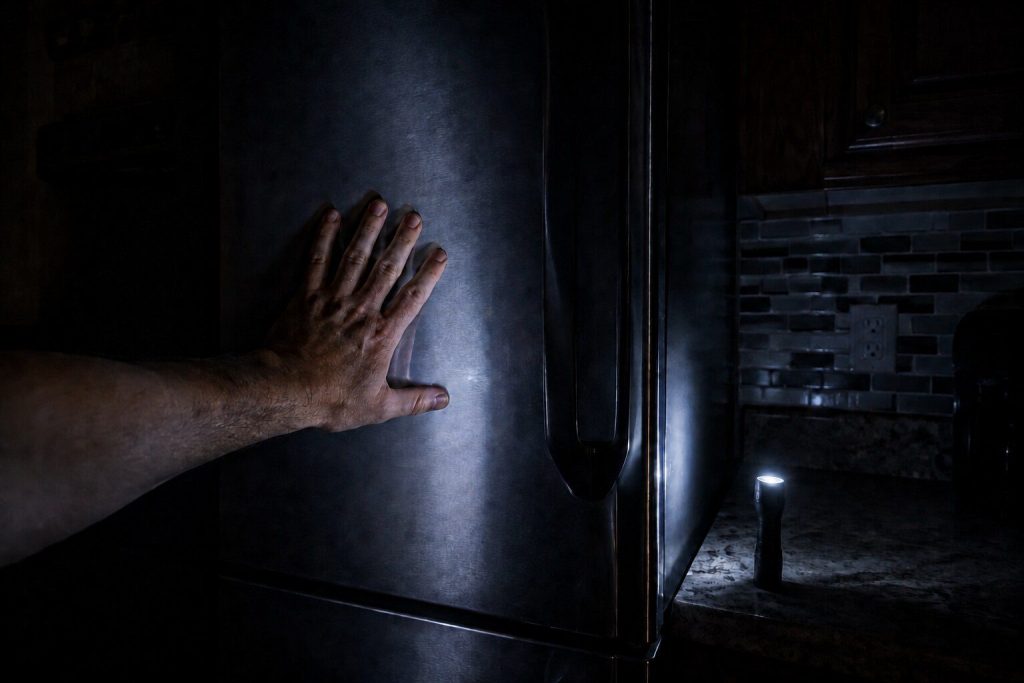
Four hours in a refrigerator, twenty-four to forty-eight in a freezer, and one rule that matters more than either number: keep the doors shut.
Read more
Tell us the model number and what it is doing.
This article is based on:
- Official manufacturer documentation
- Internal repair procedures
- Technician repair history
- Company quality standards